


The WFP Centre of Excellence against Hunger in Brazil held webinars aimed at WFP offices in West and Central Africa, focusing on promoting cooperation for sustainable school feeding policies. The sessions took place in French on 5 May and in English on 7 May, bringing together teams from various countries in the region.
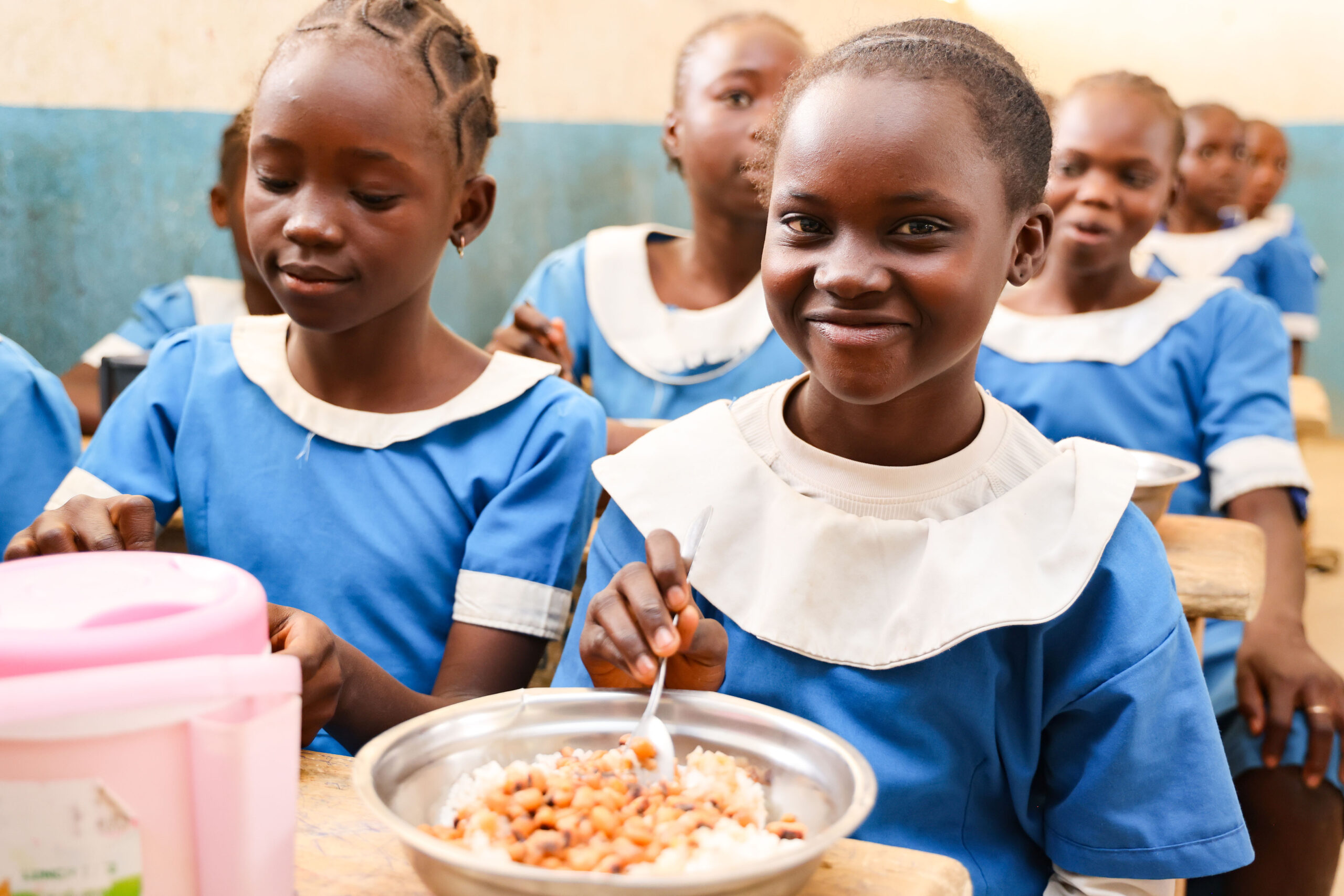
The meetings form part of the Centre of Excellence’s South-South cooperation initiatives and aim to share experiences to strengthen national capacities in implementing school feeding programmesusing locally grown produce, a strategy recognised for generating simultaneous benefits for child nutrition and rural economic development.
During the webinars, concrete examples were presented of the Centre of Excellence’s work with partner countries, such as Cameroon, Senegal, São Tomé and Príncipe, and Benin, including support for the development and expansion of public policies, technical training in food and nutritional security, and school food education initiatives.
Another highlight of the sessions was the presentation of social technologies applied to school feeding and climate resilience, such as the construction of cisterns and biodigesters, and theestablishment of school gardens and seed banks, amongst others. These solutions help to mitigate the impacts of climate change and strengthen food systems that are more sustainable and adapted tolocal realities.
In addition to facilitating the exchange of experiences, the meetings also served as an interactive forum for WFP country offices to share their priorities, challenges and specific needs, enabling the Centre of Excellence to identify opportunities for technical cooperation.
“These webinars are an opportunity to connect countries, share solutions that have already demonstrated concrete results and, at the same time, listen to the needs of country offices. Our aim is tostrengthen dialogue and jointly build pathways to expand sustainable and resilient school feeding programmes,” says Letícia do Valle, from the Centre of Excellence’s Programmes department, who isresponsible for coordinating the sessions.
Lasting one hour each, the webinars reinforce the Centre’s role as a global platform for knowledge and dialogue, connecting countries and promoting practical solutions to combat hunger and build more resilient school feeding systems.