


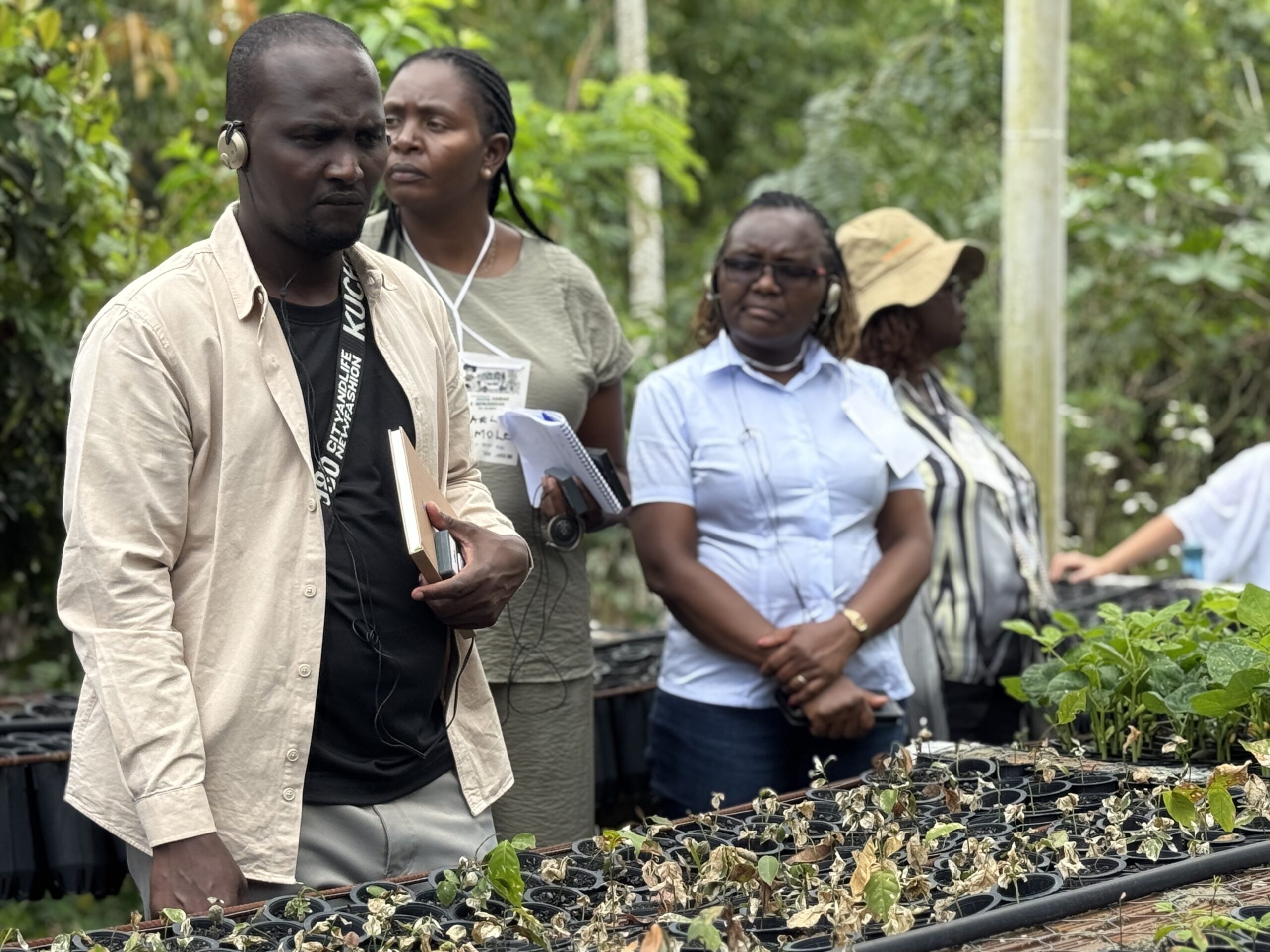
A delegation from Kenya is undertaking a study visit to the Brazilian semi-arid region of Pernambuco between 5 and 9 October to learn about social technologies for water collection, storage and sustainable use. The mission aims to identify solutions that can be adapted to the Kenyan context, particularly to expand access to water in schools.
The programme, organised as part of the project “Exchange of Experiences – Cisterns Programme and Social Technologies for Access to Water”, began in Recife with presentations on the Cisterns Programme, the work of the ASA network (Brazilian Semi-Arid Region Coordination) and the objectives of cooperation between Brazil and Kenya. Participants also shared experiences from their own regions and discussed the main challenges relating to water security.
Throughout the mission, the Kenyan delegation – comprising eight government representatives, one member of the embassy staff and one from the WFP office in Kenya – will visit various municipalities in Pernambuco, including Pesqueira, Buíque, Carnaíba, Afogados da Ingazeira, Tabira and Tuparetama. The activities provide an opportunity to learn about ways of living in the Semi-Arid region and technologies focused on collecting and storing water for human consumption and food production.
Among the initiatives to be visited are first- and second-water cistern systems, pavement cisterns, underground reservoirs, productive backyards, sewage treatment systems with biogas production, and solar power generation. Visitors will also learn about seed conservation, agroecological production and environmental restoration initiatives developed by farming families.
Indigenous territory
One of the highlights of the mission will be a visit to the Xukuru indigenous territory in Pesqueira, featuring its cistern for drinking water, the Mãe Zenilda Xukuru Seed House, the medicinal plant laboratory, an agroforestry site and practices for the restoration of degraded areas. They will then proceed to the property of smallholder farmers who grow vegetable gardens, fruit trees and ornamental plants in Buíque.
The mission will conclude with workshops and working sessions focused on the Maji Plus programme, an initiative led by the Kenyan government to tackle the challenges of access to water and energy in schools located in the country’s arid and semi-arid regions. The programme was inspired by Brazil’s Cistern Programme.
Discussions will focus on refining the programme, the first phase of which involves the installation of cisterns in dozens of Kenyan schools. As well as identifying opportunities and challenges, the partners will define the next steps to strengthen technical cooperation between the two countries.
Joint effort
The visit is being accompanied by Vinicius Limongi, Head of Programmes at the WFP Centre of Excellence against Hunger in Brazil, and by Joelcio Carvalho, coordinator of the Regenerative School Feeding Project (a partnership between the Centre of Excellence and the Rockefeller Foundation), and is taking place thanks to a partnership between various institutions on the Brazilian, Kenyan and bilateral sides.
On the Brazilian side, the event is a partnership involving the Ministry of Development and Social Assistance, Family and the Fight against Hunger (MDS), ASA, the Brazilian Cooperation Agency (ABC) and the Brazilian Embassy in Kenya.
On the Kenyan side, the visit is supported by the National Drought Management Authority (NDMA), the Ministry of East African Communities, Arid and Semi-Arid Lands (ASALs) and Regional Development, the Ministry of Labour and Social Protection, the Kenyan Ministry of Finance, and the National Council for Nomadic Education (NACONEK).
As part of this multilateral effort, the visit is supported by the Global Alliance Against Hunger and Poverty, the WFP Centre of Excellence Against Hunger in Brazil, WFP Kenya and the Food and Agriculture Organisation of the United Nations (FAO).