


On 11 November, a delegation from Peru, comprising representatives from the government and the World Food Programme (WFP), took part in the first of two sessions of a virtual study visit dedicated to the exchange of experiences on school feeding between Brazil and Peru.
Organised by the WFP Centre of Excellence against Hunger in Brazil, with support from the National Fund for Educational Development (FNDE) and the Brazilian Cooperation Agency (ABC), the initiative aimed to promote the exchange of knowledge and identify lessons from the Brazilian experience that could contribute to strengthening Peru’s School Feeding Programme (PAE).
The opening ceremony was attended by the director of the Centre of Excellence, Daniel Balaban, who highlighted the importance of South-South cooperation as a means of sharing experiences and jointly developing solutions tailored to the realities of each country.
“Cooperation is, above all, a process of mutual learning. This exchange has enabled Brazil and Peru to share experiences and identify ways to strengthen public policies capable of transforming school feeding and food systems,” he said.
The visit marked a continuation of cooperation between the two countries and followed on from a bilateral meeting held in 2026 between the FNDE, ABC, the Centre of Excellence, WFP Peru and the Peruvian government.
Background
During the first session, the Peruvian delegation outlined the background, progress and challenges of its School Meals Programme, whilst Brazilian representatives shared the structure and key features of the National School Meals Programme (PNAE).
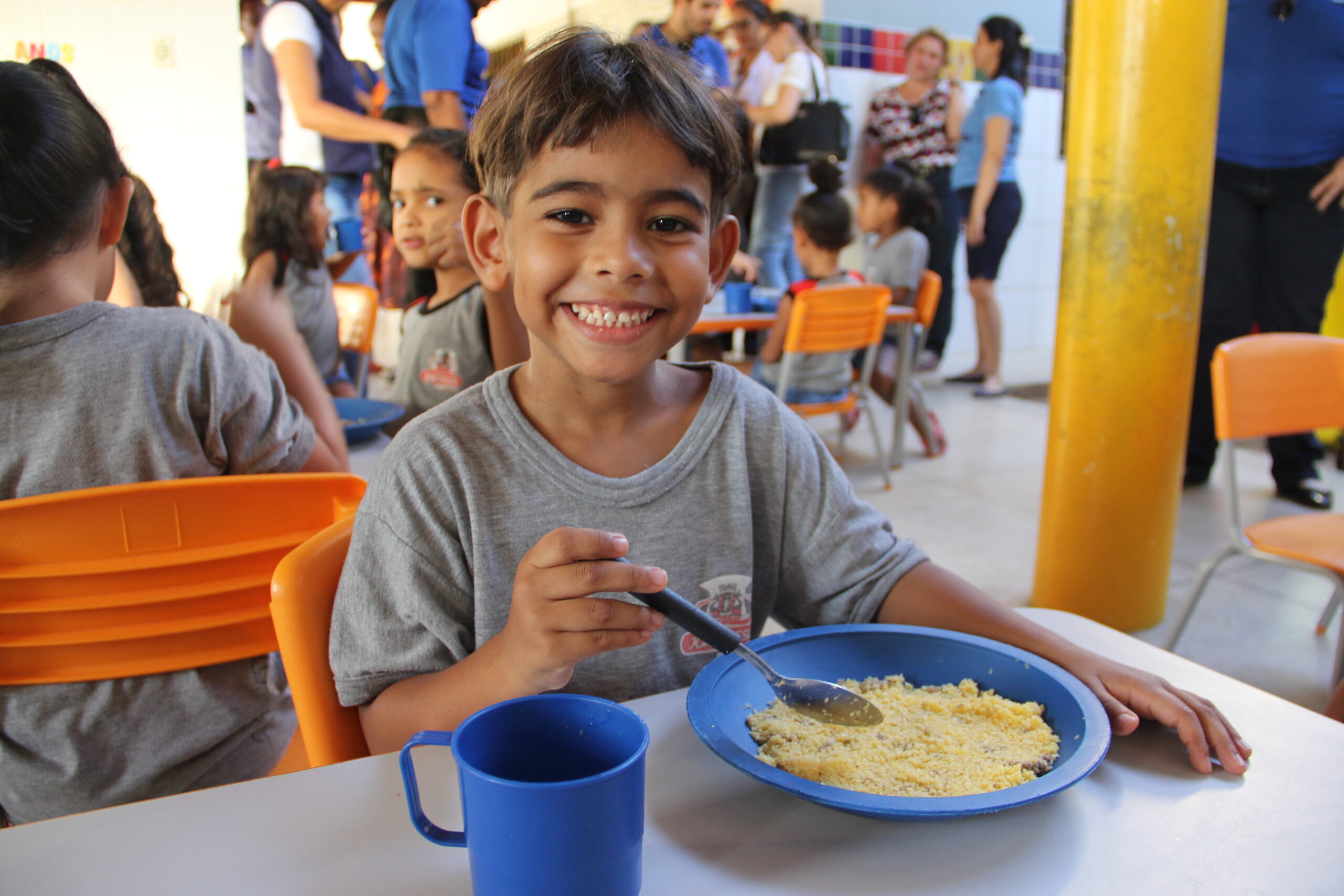
The Peruvian programme, established in its current form in 2025 and coordinated by the Ministry of Development and Social Inclusion (MIDIS), serves more than 4.1 million pupils in approximately 67,000 state schools. Its priorities include strengthening links with family farming, expanding the supply of fresh food and implementing models suited to the country’s diverse regional contexts.
The Brazilian experience was presented by Karine Silva dos Santos, general coordinator of the National School Meals Programme at the FNDE, who outlined the programme’s structure and key components.
“The PNAE has shown that school feeding can go beyond simply providing meals and establish itself as a policy integrated with education, adequate nutrition, social participation and the strengthening of family farming. Sharing this experience has also enabled us to learn from the approaches Peru is developing,” she said.
Exchange
Topics of interest for the exchange included governance and institutional sustainability, decentralised management, public procurement from family farming, and mechanisms for food quality and safety.
The first session marked the start of an exchange process divided into two virtual meetings. Between the meetings, the Peruvian delegation will have access to videos and technical materials on key aspects of the Brazilian experience, such as the legal and institutional framework, governance, funding, management, social oversight, family farming and food quality.
The aim is to enable participants to deepen their understanding of the PNAE and to identify questions and topics for discussion during the second session.
The second stage of the virtual visit is scheduled for 18 November, with more time set aside for dialogue, the exchange of experiences and the clarification of any queries raised by the Peruvian delegation.
The virtual visits formed part of the cooperation initiatives promoted by the Centre of Excellence, with support from the FNDE and ABC, to encourage the exchange of knowledge and support the strengthening of public school meals policies.