


Sustainable urban food systems were the central theme of two events held concurrently in Curitiba, with the Centre of Excellence taking part.
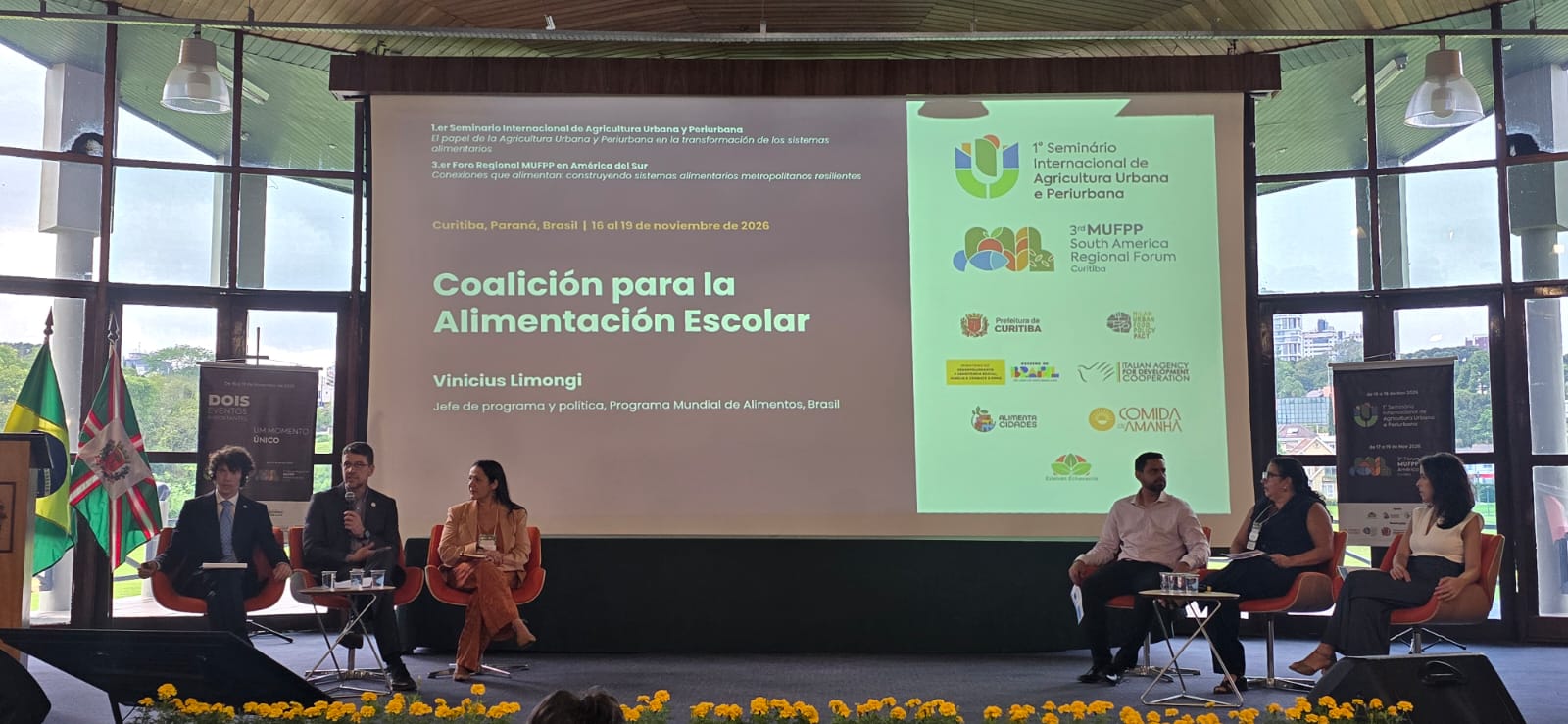
Thaynara Dias, an agricultural engineer in the Projects department, represented the Centre both at the 1st International Seminar on Urban and Peri-urban Agriculture, held from 16 to 18 November, and at the 3rd Regional Forum of the Milan Urban Food Policy Pact (MUFPP) in South America, held from 17 to 19 November. The latter event also featured Programme Officer Vinicius Limongi, who represented the Coalition for School Feeding during his address at the event’s closing panel.
Seminar
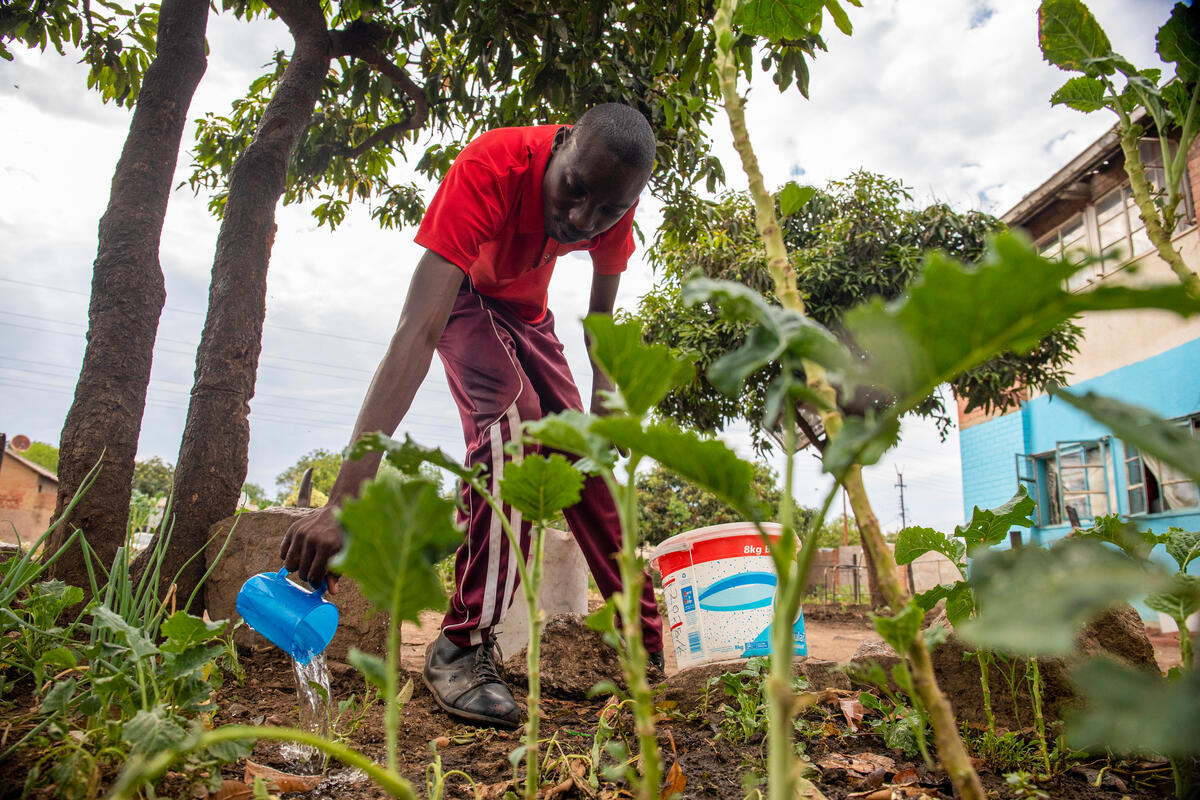
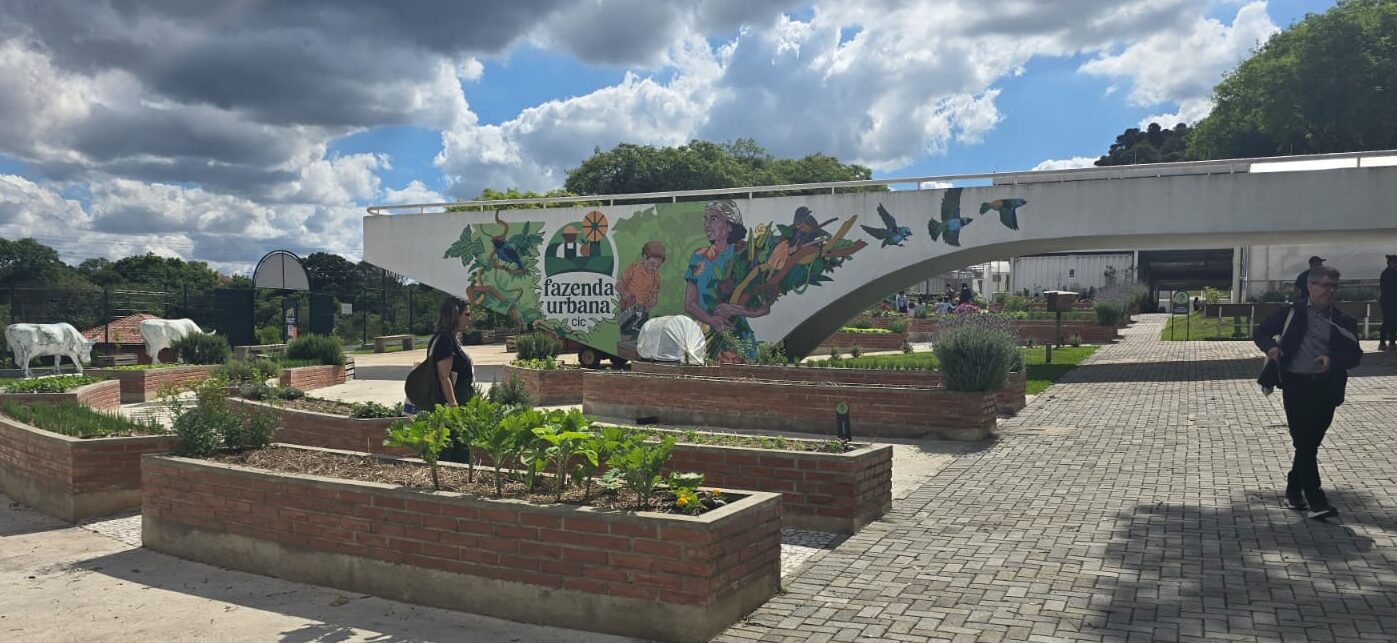
The 1st International Seminar on Urban and Peri-urban Agriculture, linked to the Alimenta Cidades Strategy, facilitated discussions aimed at strengthening the implementation of public policies on urban and peri-urban agriculture as a strategic component of sustainable urban food systems. As part of the InovaSAN Project, the Centre of Excellence developed a course on food systems specifically for Alimenta Cidades managers.
“Urban and peri-urban agriculture is an important tool for promoting food and nutritional security in cities, by increasing access to healthy food and linking this agenda to social inclusion, sustainability and adaptation to climate change. The exchange between participants also enabled them to share experiences and identify solutions capable of inspiring public policies tailored to different local contexts,” said Thaynara, who brought other initiatives from the Centre of Excellence to the event’s collective spaces, such as AlimentaLAB, a repository of good practices from the Global South on sustainable food systems.
Forum
The seminar took place as part of the 3rd MUFPP Regional Forum in South America, under the theme ‘Connections that nourish: building resilient metropolitan food systems’. The MUFPP, which stands for the Milan Urban Food Policy Pact, is an international platform for cooperation between cities committed to fairer, healthier, more sustainable and more resilient food systems.
Led by the City of Milan, the Pact emerged as one of the key legacies of Expo Milan 2015 and currently brings together more than 340 signatory cities across six continents.
During the Forum, representatives from local governments, institutions, organisations and communities discussed ways of strengthening cooperation and governance within metropolitan food systems. The topics addressed included food and nutritional security, regenerative urban and peri-urban agriculture, school feeding, climate change, agrobiodiversity, resilience, and the reduction of food loss and waste.
At the close of the meeting, Vinicius Limongi represented the School Feeding Coalition, a multi-sectoral initiative whose secretariat is hosted by the WFP. His participation took place during the high-level session dedicated to the Coalition and the ‘Cities Feeding the Future’ initiative, which brought together representatives from cities across the region to discuss the contribution of local governments to strengthening school feeding programmes.
“School feeding has enormous potential to link public policies and transform food systems. By bringing together schools, local governments, producers and communities, we can make progress not only in providing healthy meals to pupils, but also in strengthening local agriculture and building more sustainable and resilient food systems,” said Vinicius Limongi.