


“What needs to happen for a family to eat well every day?” This question was the central theme of the presentation given by Igor Carneiro, Partnerships Officer at the WFP Centre of Excellence against Hunger in Brazil, during the 1st Federal District Health Promotion Congress, held at the OAB-DF headquarters in Brasília on 24 and 25 November.
The presentation showed how the answer depends on the specific barriers in each area. Where food is available but the budget is insufficient, a cash transfer can boost purchasing power. Where supply is irregular, local procurement and improvements in transport and storage can help to supply the area.
“Between an approved policy and a plate of food lies an entire operation. The WFP supports governments in identifying barriers, organising delivery and strengthening the teams that will sustain the policy and programmes,” she said.
Currently, 2.69 billion people cannot afford a healthy diet, according to the report The State of Food Security and Nutrition in the World (SOFI 2026).
WFP around the world
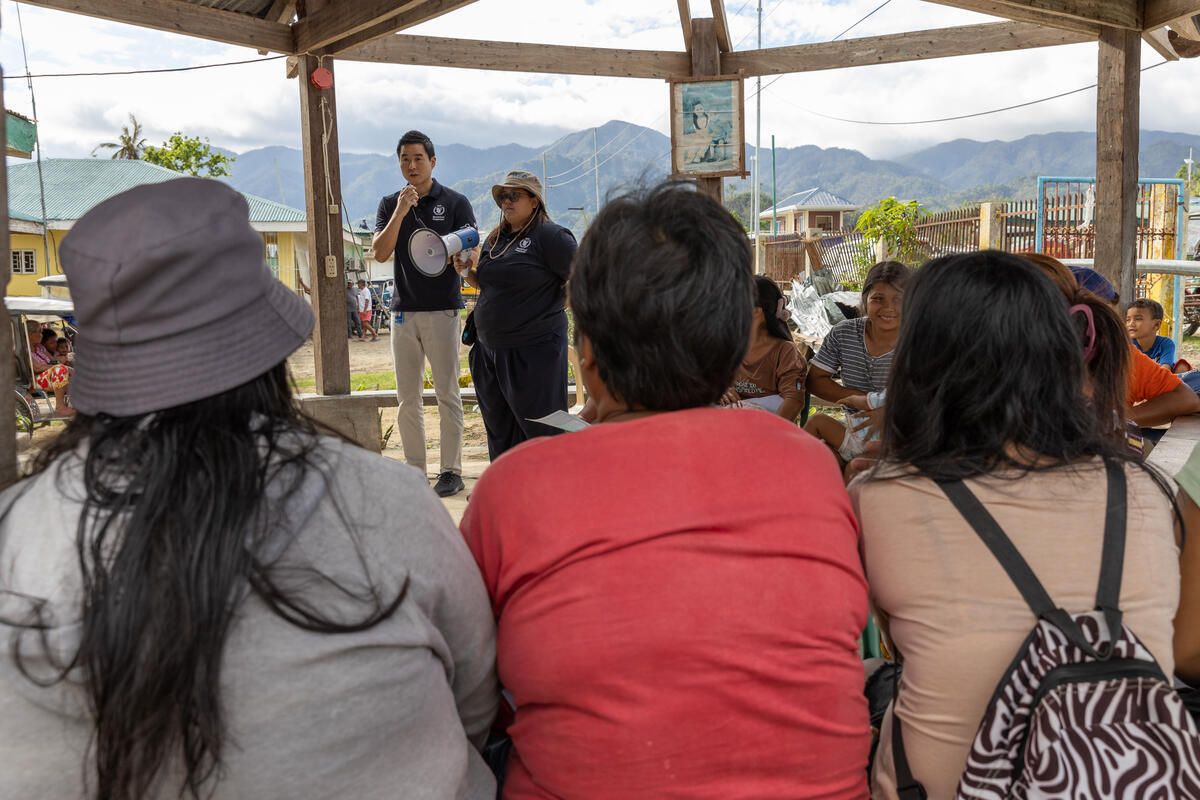
In the Philippines, the government and the WFP used the national 4Ps social protection programme to transfer funds to more than 42,000 households in five provinces, two to three days before the arrival of Super Typhoon Uwan in November 2025.
The operation demonstrated how a payments system already in place can help ensure that assistance reaches families whilst they still have time to buy food and other essential items.
In Benin, the WFP, with support from the Centre of Excellence, supported the implementation of the national school feeding programme, the management of which was transferred to the National Food and Nutrition Agency in 2024. The transition involved tasks such as checking stocks in schools and reviewing financial records.
The Centre of Excellence also contributes on another front, through a technical cooperation partnership with France and the WFP office in Benin, which includes exchanges on local procurement and food and nutrition education. This work brings family farming closer to school canteens.
The discussion also highlighted what needs to be monitored once the assistance has been delivered. The number of families assisted indicates the scope of an operation.