


 On International School Meals Day, celebrated on 12 March, the WFP Centre of Excellence against Hunger in Brazil reinforces its strategic role in providing technical support to policies and programmes to combat hunger around the world, especially those based on school meals using products from family farms.
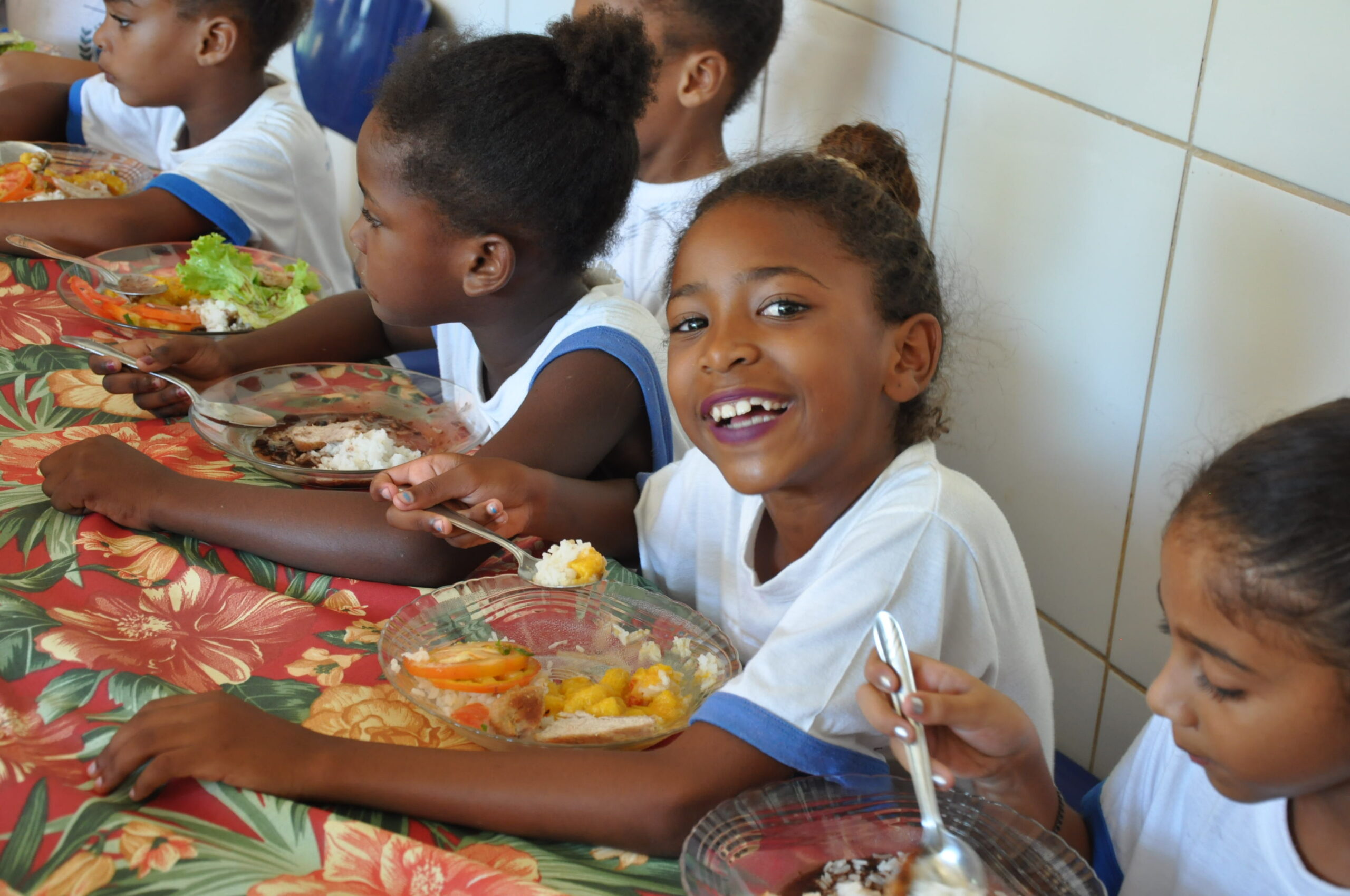
Brazil is a global benchmark with its National School Feeding Programme (PNAE), which provides around 50 million healthy meals a day to almost 40 million public school students.
Considered one of the largest and most comprehensive programmes in the world, PNAE integrates nutrition, education and sustainable development. Its model prioritises the purchase of food from family farms, strengthening local economies and promoting culturally appropriate diets, a guideline that inspires public policies in several countries.
The Brazilian experience is widely disseminated internationally, with technical support from the WFP Centre of Excellence, which receives foreign delegations and contributes to the formulation of school feeding programmes in countries in Africa, Asia and the Americas.
Report
School feeding programmes around the world are expanding, reaching 466 million children (80 million more than in 2020), according to the State of School Feeding Worldwide 2024, report, released in September 2025 by the School Meals Coalition.
With the Centre of Excellence in its secretariat, the Coalition is an initiative that brings together more than 100 countries committed to ensuring that all children have access to a healthy meal at school by 2030.
The study also highlights the record volume of investments in school feeding programmes around the world: US$ 84 billion annually, almost all of which comes from domestic budgets, demonstrating a structural change that reveals that school feeding is no longer seen as an issue dependent on donors and has come to represent a powerful and strategic public policy.