


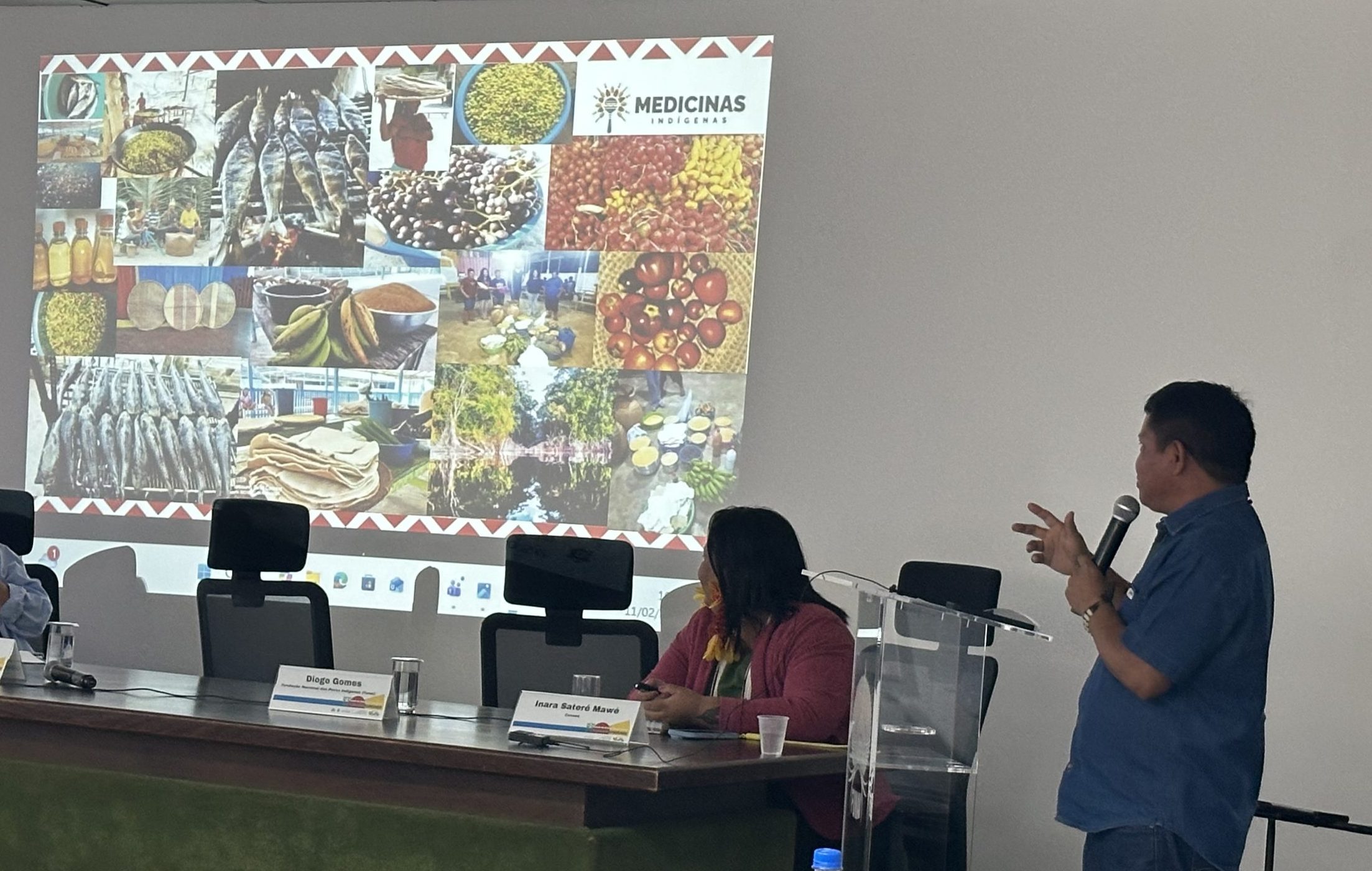
The Centre of Excellence participated in the preparatory panels for the Workshop on the Construction of the Integrated Food and Nutritional Security Action Protocol for Indigenous Peoples, held on 11 February at the headquarters of Funai in Brasilia.
The event was preparatory to the major workshop that will take place in April 2026, and was attended by representatives of government agencies, experts and indigenous leaders.
The Centre of Excellence participated in discussions on the development of the integrated action protocol for food and nutritional security for indigenous peoples and shared its experience with the reality show Escola de Sabores (School of Flavours), which highlighted school cooks from indigenous, quilombola and riverine communities, showing that the National School Feeding Programme (PNAE) respects their eating habits.
For Sineide Neres, a nutritionist at the Centre of Excellence’s Programmes Unit who participated in the roundtable discussion during the event, indigenous school feeding is a tool for promoting health, strengthening food culture and guaranteeing rights. “Indigenous school meals recognise and value the traditional knowledge and practices of each people, because their menu seeks to dialogue with the culture of each ethnic group,” she said.
Panel 2, dedicated to the challenges and potential of integrating government actions on food and nutritional security, highlighted the debate on the implementation of the PNAE in Indigenous Lands.
Participants included Daniel Bandoni, from the National Fund for Education Development (FNDE), and Fernando Merloto, from the Federal Prosecution Office (MFF)/CATRAPOVOS, who presented structural and operational aspects of the PNAE and discussed ways to strengthen its implementation, considering the cultural specificities of indigenous peoples.