


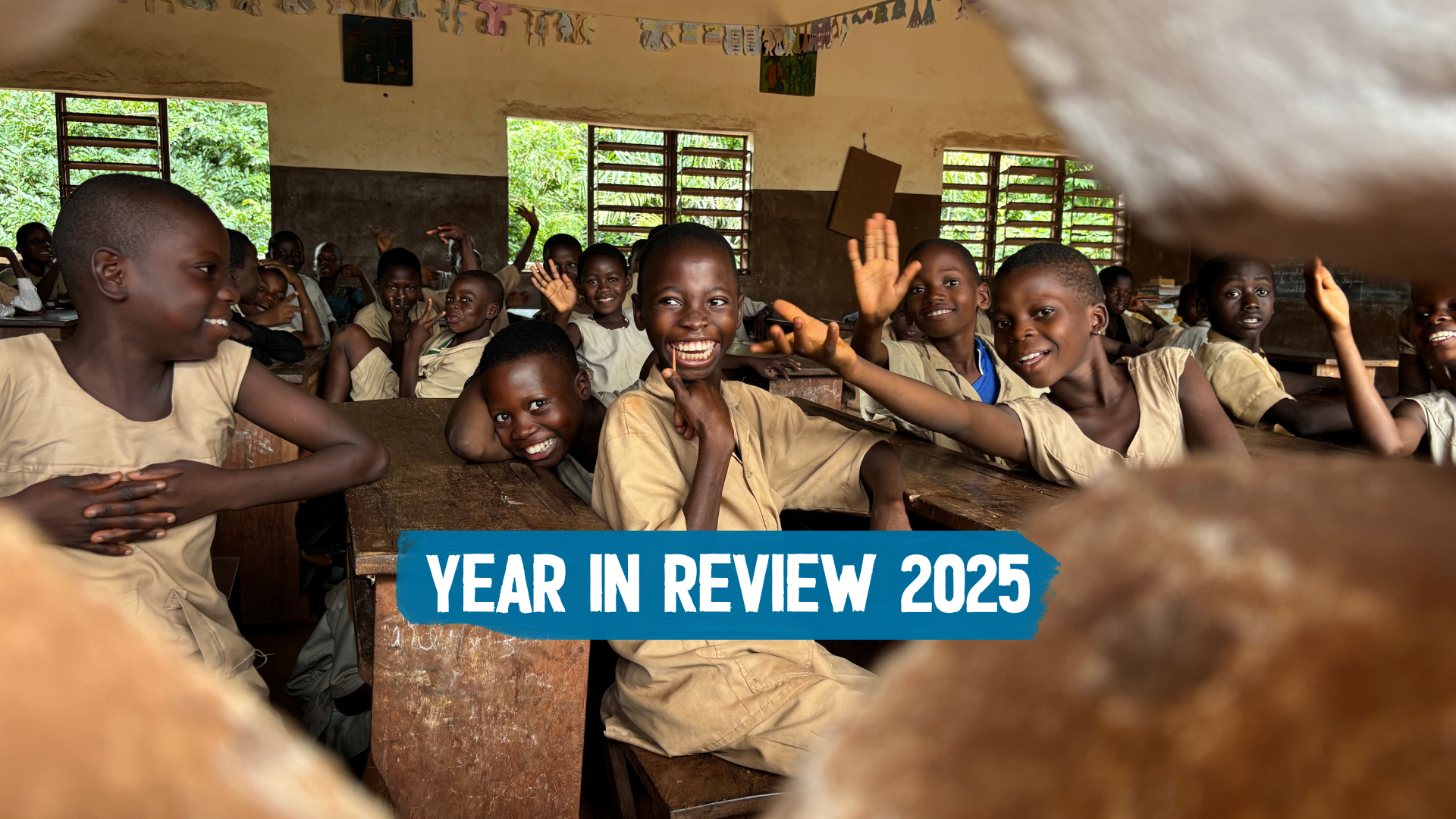
 2025 was an intense year for the WFP Centre of Excellence against Hunger in Brazil, marked by major international meetings, numerous technical missions, and study visits within the framework of South-South cooperation. Below are the year’s main highlights.
EVENTS
School Meals Coalition Global Summit
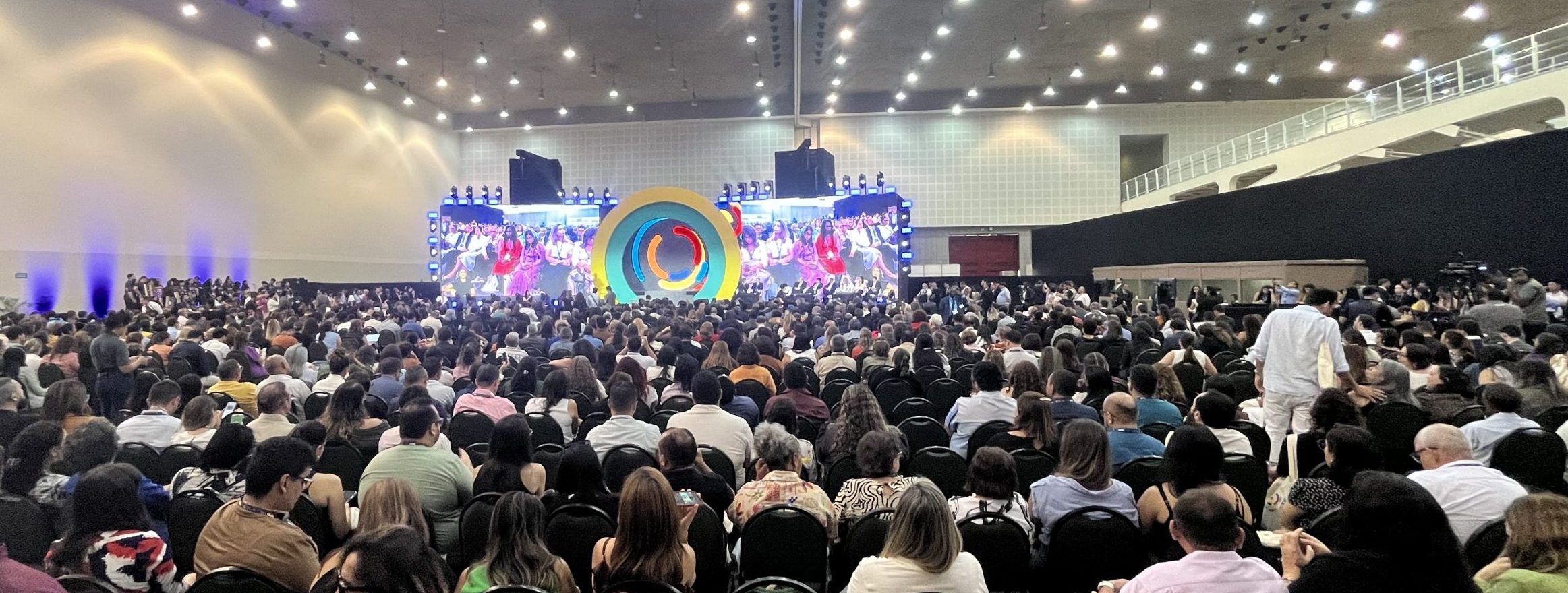
In September, the city of Fortaleza hosted the 2nd Global Summit of the School Meals Coalition, the world’s largest event dedicated to the topic, which brought together leaders from various countries to discuss the expansion and strengthening of school feeding programs. The Vice President of Brazil, Geraldo Alckmin, and WFP Executive Director Cindy McCain were present.
The event was organized by the WFP Centre of Excellence in Brazil and the School Meals Coalition Secretariat, in partnership with the Ministry of Education, the National Fund for Education Development (FNDE), and the Brazilian Cooperation Agency (ABC), with support from the Government of the State of Ceará. On this occasion, 19 governments announced new commitments to expand school feeding in their territories.
World Food Day
This year, World Food Day (WFD), a date that highlights the importance of healthy eating and promotes cooperation to eradicate hunger, malnutrition, and food insecurity, was celebrated in partnership with the Government of the State of Ceará during the 2nd edition of the “Ceará Without Hunger” Festival in Fortaleza.
WFD is a date established by the four UN agencies whose mandate includes combating hunger: the World Food Programme (WFP), the Food and Agriculture Organization (FAO), the International Fund for Agricultural Development (IFAD), and the Inter-American Institute for Cooperation on Agriculture (IICA).
The Lancet Series
The Lancet Series – Ultra-Processed Foods and Human Health was launched in Brazil with an event held in December at the Fiocruz auditorium in Brasília.
Scientists from the Center for Epidemiological Research in Nutrition and Health (Nupens) at USP, Carlos Monteiro and Patricia Jaime, and Phillip Baker from the University of Sydney, co-authors, presented their articles on the consequences of ultra-processed food consumption.
Chef and WFP Brazil High-Level Supporter Rita Lobo moderated the panel on Public Policies in Latin America. The full launch can be viewed on the @WFPBrasil YouTube channel.
TECHNICAL MISSIONS
In 2025, the Centre of Excellence strengthened South-South cooperation through technical missions aimed at exchanging experiences with partner countries on school feeding, family farming, food systems, and sustainable production.
Senegal
The first mission of the year for the Centre of Excellence took place in Senegal in February, with the goal of supporting the review of the country’s National School Feeding Policy and the development of its nutritional guidelines for school meals. Senegal aims to expand school feeding to 65% of its public primary schools by 2028.
In addition to assessing the available infrastructure, the mission helped strengthen dialogue with school managers, authorities, and communities involved in program implementation. The mission was carried out under the Brazil-France partnership.
Republic of the Congo
Two missions by the Centre of Excellence were conducted under the activities of the “Seeds for Tomorrow” Project in the Republic of the Congo. The first, in July, focused on training courses on soil management and biofertilizer production, and the second, in August, aimed to consolidate the results achieved by the project and plan the next steps.
The project was concluded in December 2025 with the launch of the Final Evaluation Report, which highlighted the contribution of activities to initiating the process of revising the country’s School Feeding Policy.
The project aimed to promote family farming and school feeding through public procurement in the African country and was part of a South-South cooperation initiative between the governments of Brazil and the Republic of the Congo, with support from the World Food Programme (WFP), the United Nations Office for South-South Cooperation (UNOSSC), and funding from the IBSA Fund (India, Brazil, and South Africa).
São Tomé and Príncipe
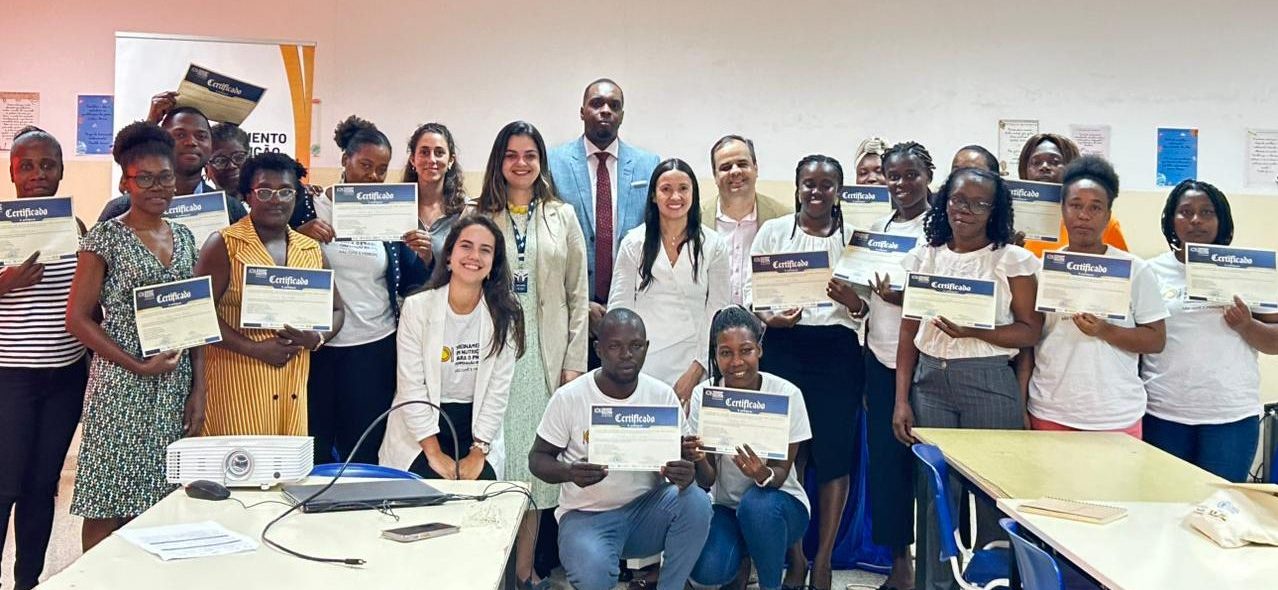
São Tomé and Príncipe hosted two missions from the Centre of Excellence. The first, in October, focused on school nutrition training, organized by the Centre of Excellence with support from FNDE, ABC, and the World Food Programme (WFP) in São Tomé and Príncipe.
Participants received theoretical and practical training on planning nutritionally adequate menus, using local products, food safety, nutritional assessment of students, and visited farms supplying the program.
The second mission, held in late October and early November under the Brazil-France partnership, aimed to strengthen school feeding through the implementation of solutions adapted to the local context, with a focus on sustainability and food security.
A rainwater harvesting and storage cistern was built for potable use at one school. At another, eco-friendly stoves were installed, significantly reducing smoke emissions and firewood consumption.
During the mission, a fish tank was also built to integrate fish farming into school feeding; training was provided on producing alternative feed for pigs and chickens using locally available resources; and theoretical and practical sessions were held on biofertilizers and bioinsecticides made from native plants and local ingredients.
Benin
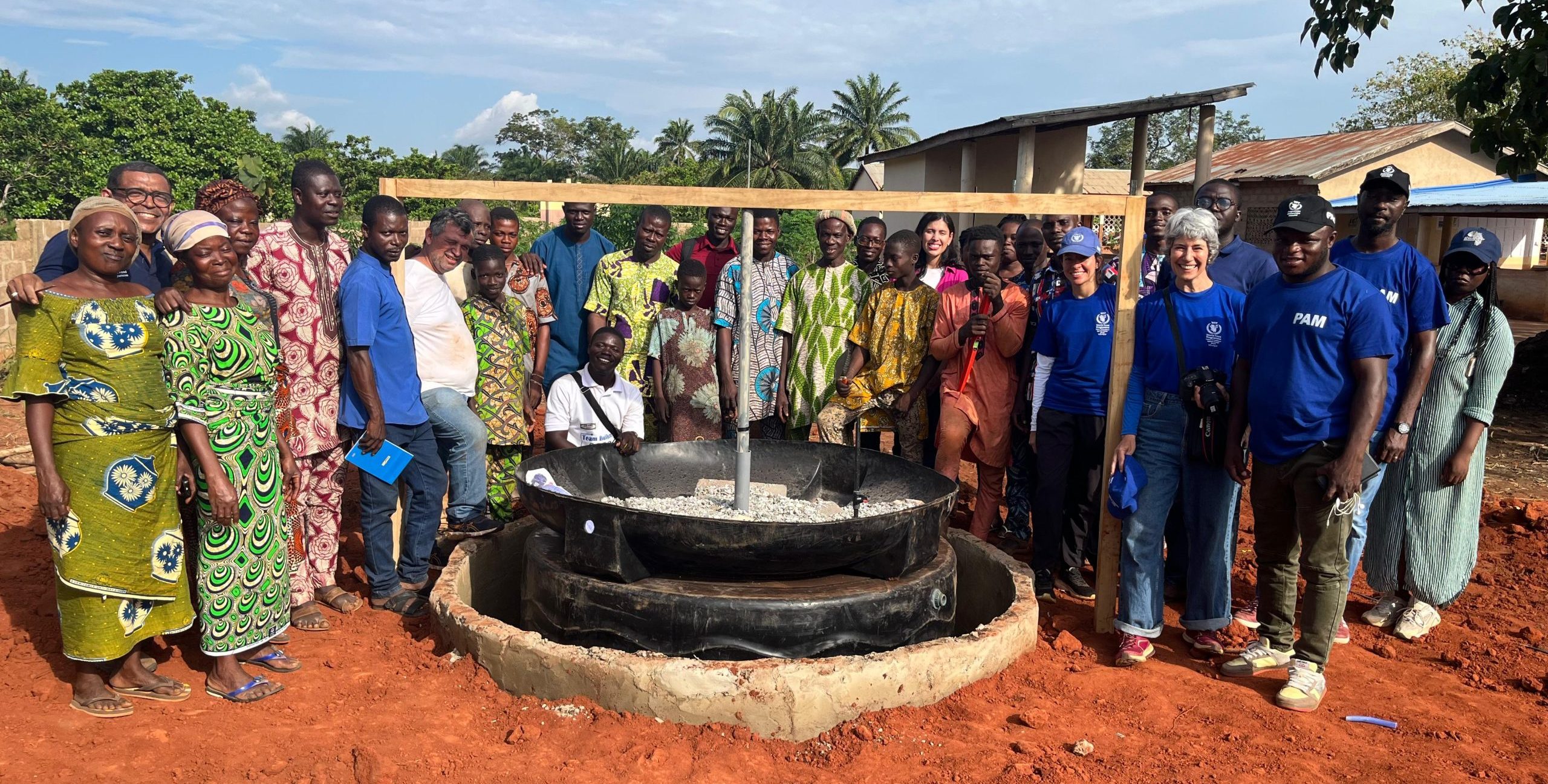
Two simultaneous missions were carried out by the Centre of Excellence in Benin in October.
The first mission took place in the northern region of the country under the Beyond Cotton Project. Brazilian and Beninese specialists participated in training activities on nutrition and sustainable agriculture involving schools, cooperatives, school committees, and government technicians. The mission also included an educational activity on food and nutrition for children.
The project seeks to integrate family farming into school feeding and promote income alternatives for cotton producers. It is implemented by the Centre of Excellence with support from the Brazilian Cotton Institute (IBA), the Government of Benin, WFP in Benin, and ABC.
The second mission, held in southern Benin, was part of the Brazil-France partnership, with support from WFP in Benin and the local government. The focus was on implementing clean energy technologies applied to school feeding, including the construction of a biodigester, eco-friendly stoves, and economical garden beds in schools.
The mission also featured an educational activity on food and nutrition for children and a national seminar on local procurement for the Integrated National School Feeding Program (PNASI), strengthening the link between family farmers and school canteens.
STUDY VISITS
This year, the Centre of Excellence welcomed several delegations and promoted virtual visits from countries seeking to learn about Brazil’s experience in school feeding, family farming, and social protection.
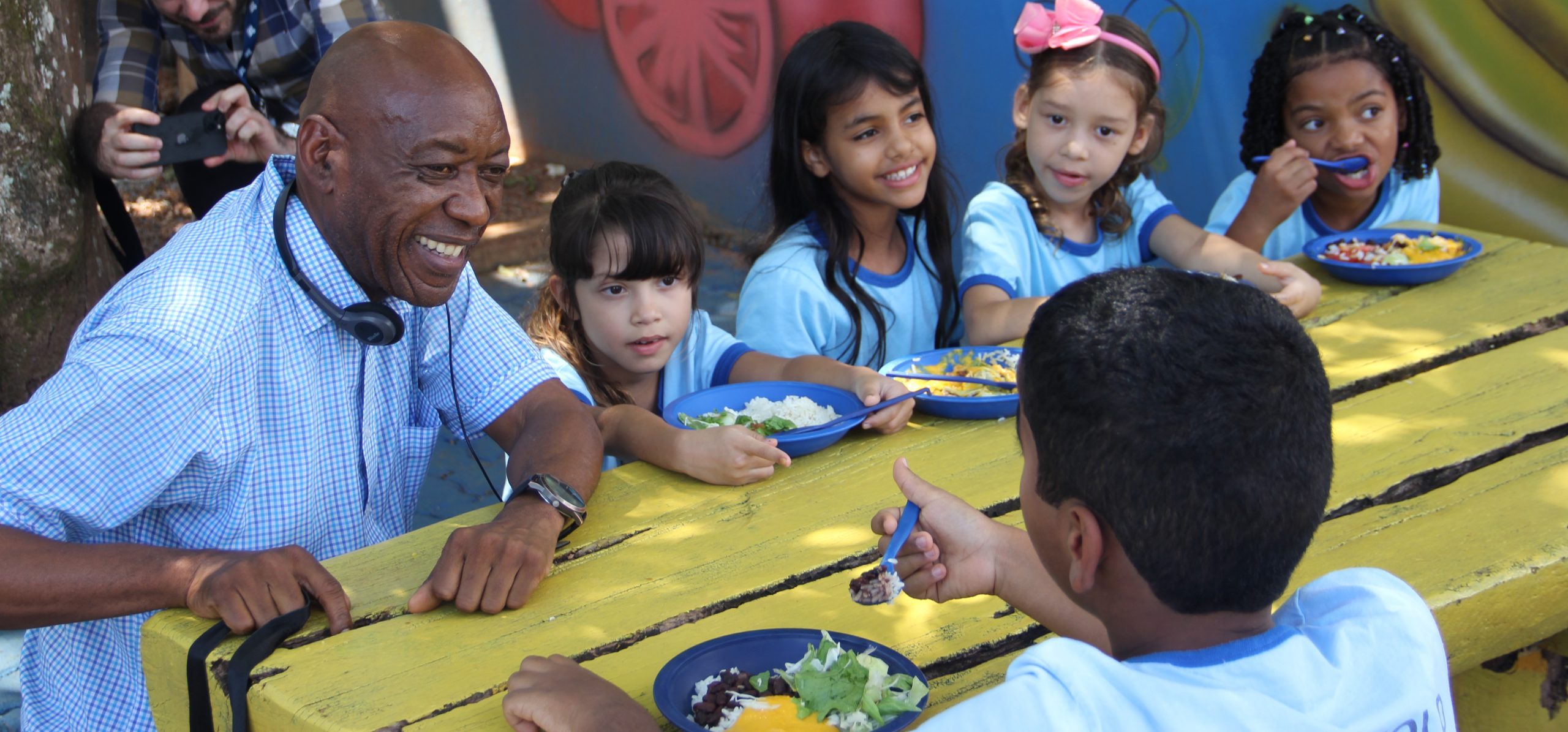
South Africa Delegation
In March, a delegation of 11 government representatives from South Africa visited Brazil to learn about aspects of purchasing from family farming for school feeding, focusing on food safety, supply frequency, and the multisectoral functioning of the National School Feeding Program (PNAE).
One of the country’s challenges is to strengthen and expand the capacity of local farmers by fostering the creation of cooperatives and providing training to produce according to school demand. The visit was organized by the Centre of Excellence with support from FNDE, ABC, and the Brazilian government.
Virtual Visit from Jordan
In May, the Centre held two virtual visits with representatives from Jordan to present specific aspects of the Brazilian school feeding model, such as the legal framework, financing, monitoring, and integration with family farming.
The activity was promoted by the Centre of Excellence in partnership with FNDE, ABC, and WFP in Jordan.
Webinar with Bangladesh
In July, the Centre of Excellence hosted a webinar with representatives from 15 ministries of the Government of Bangladesh to present Brazil’s main strategies for combating hunger.
The session highlighted family farming and school feeding as pillars for social development through joint work across different government sectors. Since 2012, the Centre of Excellence and WFP have supported the Government of Bangladesh in building and strengthening its national school feeding program.
Benin Delegation
Government representatives from Benin visited Brazil in May as part of the Beyond Cotton Project. The agenda, aimed at deepening the exchange between the two countries, included technical visits to schools, health units, family farming settlements, and meetings with authorities from the Ministries of Education, Agriculture, Health, and Social Development.
The Beyond Cotton Project is promoted under South-South Cooperation between Brazil, Benin, and WFP, with support from the Brazilian Cotton Institute (IBA), ABC, and the Centre of Excellence.
Visit to Indonesia
In August, representatives from the Centre of Excellence traveled to Jakarta to participate in the Academic Forum and the International Stakeholder Seminar on Indonesia’s Free Nutritious Meals Program (MBG).
The visit aimed to analyze the national context and discuss possible pathways to strengthen school feeding in Indonesia. The Indonesian government seeks to universalize school feeding in the country, increasing coverage from 6 million to 80 million students.
Pakistan Delegation
In December, Brazil hosted a delegation from Pakistan for a study mission that included a field visit in Arapiraca (Alagoas) and another in Brasília. The mission focused on learning about experiences in food and nutrition security, family farming, and sustainable rural development.
The visit was organized by the Centre of Excellence in partnership with the International Fund for Agricultural Development (IFAD), the Brazilian Government, and ABC, with support from the Government of the State of Alagoas for the field activities.
PARTNERSHIPS
Brazil-France
To expand South-South cooperation in school feeding, a Declaration of Intent was signed in October between the Government of France, the National Fund for Education Development (FNDE), the Brazilian Cooperation Agency (ABC), and the Centre of Excellence.
The agreement provides for joint actions in technical training, exchange missions, study visits, development of knowledge products, and support for the formulation and monitoring of national school feeding programs.
Hunger doesn’t go on vocation Campaign
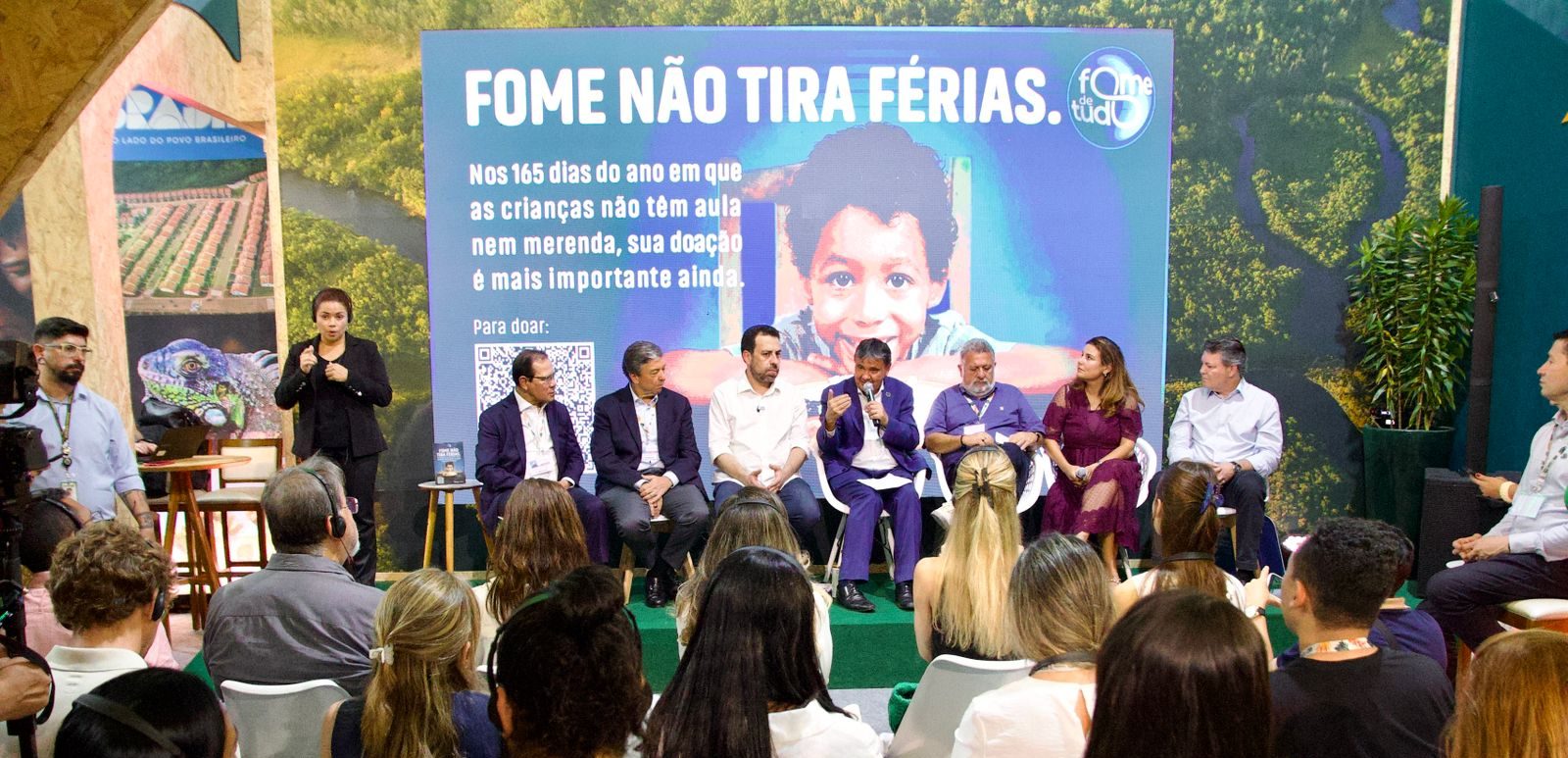
In November, during COP30, the pre-launch of the campaign “Hunger Doesn’t Take a Vacation” took place, a partnership between WFP, Instituto Fome de Tudo, Caixa Econômica Federal, and ELO. The initiative aims to ensure healthy and quality food for children during school recess periods.
In its pilot phase, the campaign intends to serve one thousand public school children in municipalities across several states through a social card with a monthly amount exclusively for purchasing food in accredited markets.
INITIATIVES
Agroecological PNAE
In January, the Centre of Excellence hosted the meeting that launched the Agroecological PNAE project, carried out by the Instituto Comida do Amanhã in partnership with Instituto Regenera, Instituto Fome Zero, and the Centre of Excellence, with support from the Rockefeller Foundation.
The project aims to strengthen incentives for small producers to bring agroecological products to school feeding. As part of the project, in October, the Centre of Excellence participated in a webinar launching the Policy Paper “The PNAE as a Driver of Agroecological Transition in Brazil: Incentives and Institutional Arrangements for Public Procurement of Healthy and Sustainable Foods.”
Reality Show

In December, the reality show Escola de Sabores premiered, featuring school cooks from riverside, Indigenous, and quilombola communities. The reality show reinforces the importance of respecting communities’ traditional eating habits, ensuring menus that reflect their customs and culture. The program is the result of a partnership between FNDE, ABC, and the Centre of Excellence and will air until February 2026 on Band and the Sabor & Arte channel.
In May, an award ceremony was held for the winning school cooks and nutritionists from the previous reality show, Vida de Merendeira. The reality shows aim to show participants’ knowledge of PNAE guidelines while honoring the professionals responsible for school feeding.
PROJECTS
Beyond Cotton – Mozambique
In October, a ceremony marked the conclusion of the Beyond Cotton Project in Mozambique, which, over seven years of cooperation, strengthened family farming and promoted the sustainable use of cotton by-products. Among the highlighted results are the strengthening of the local economy through the application of intercropping techniques for cotton and food crops such as beans and sesame.
The event was attended by representatives from the World Food Programme (WFP) in Mozambique, the Manica Polytechnic Institute (ISPM), the Provincial Directorate of Agriculture and Fisheries of Tete (DPAP), the Cotton and Oilseeds Institute of Mozambique (IAOM), District Services for Economic Activities (SDAE) from different provinces, as well as the Federal University of Lavras (UFLA), ABC, and the Centre of Excellence.
Webinars
Throughout 2025, the Centre of Excellence, in partnership with the ABC and the Brazilian Cotton Institute (IBA), held a series of three webinars to share results of the Beyond Cotton Project in the three countries where it was implemented: Tanzania, Mozambique, and Benin.
The first webinar addressed the experience of South-South Cooperation in implementing the Beyond Cotton Project. The second focused on institutional procurement and market access for small producers of cotton and intercropped crops. The third covered nutrition-sensitive agriculture: diversified production and food and nutrition security.
The webinars are available in Portuguese, English, and French on the Centre of Excellence’s YouTube channel.
Seeds for Tomorrow
In addition to technical missions and field activities carried out throughout 2025, four technical manuals aimed at strengthening school feeding and family farming in the Republic of the Congo were published under the Seeds for Tomorrow Project.
The manuals share Brazil’s experiences to support the implementation of integrated public policies, focusing on the procurement of food from family farms for school feeding programs. The manuals are available in Portuguese and French in the Publications section of the Seeds for Tomorrow Project webpage.
InovaSAN and AlimentaLAB
In July, the InovaSAN Project (a name combining the words innovation and food and nutrition security) held a meeting in Brasília with representatives of cooperatives and family farming organizations from 20 Brazilian states. The goal was to present opportunities for farmers to participate in institutional food purchases carried out by WFP, especially in the context of international humanitarian assistance.
InovaSAN is a partnership between the Centre of Excellence, the Ministry of Social Development, Family and Fight Against Hunger (MDS), and ABC.
As part of InovaSAN, in June, a webinar was held to launch AlimentaLAB — the Innovation Lab for Public Policies for Healthy and Sustainable Food Systems. The initiative is a platform for registering and sharing experiences from Global South countries with innovative practices for food systems. To learn more, access: alimentaLAB.prosas.com.br
Nurture the Future
The Nurture the Future Project was presented in April in Chile during the Regional Preparatory Meeting for the United Nations Food Systems Summit for the Americas and the Caribbean (UNFSS+4).
The project, now entering its second phase, is carried out in partnership with the Ministries of Health of Brazil, Peru, and Colombia and ABC, focusing on promoting healthy and adequate food for children in Latin America through alignment with regional priorities such as the promotion of healthy diets.