


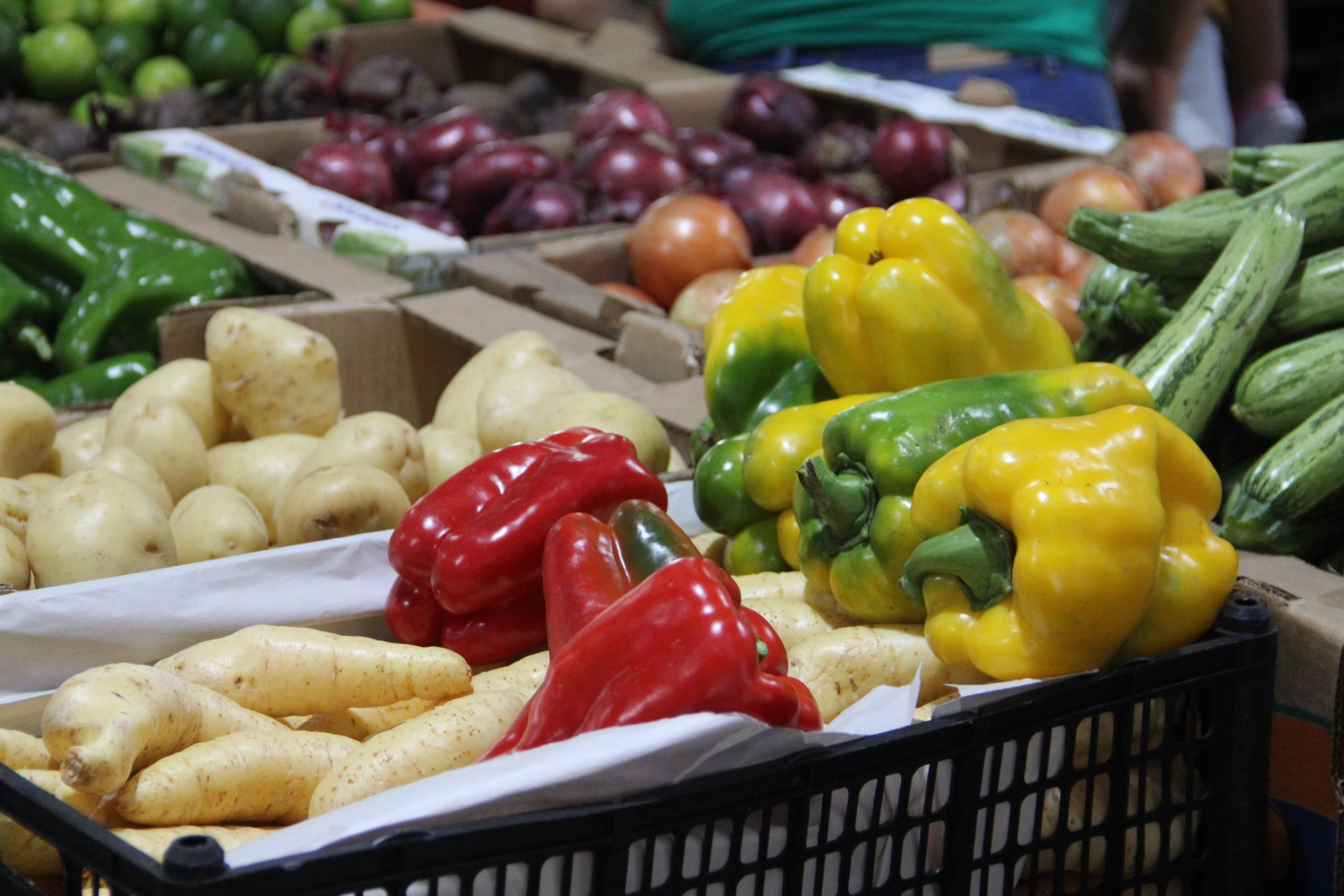
On 24 February, the Centre of Excellence promoted the first international webinar on institutional purchases from family farms, as part of the InovaSAN project. The virtual meeting discussed the importance of institutional purchases from family farmers as a food and nutrition security (FNS) policy and as a strategic tool in the face of climate change.
The opening of the event was attended by Elisângela Santos Januário, coordinator of the Department of Healthy Food Acquisition and Distribution of the Ministry of Developmentand Social Assistance, Family and Hunger Alleviation (MDS); Rifat Iqbal, from the Brazilian Cooperation Agency (ABC) of the Brazilian Ministry of Foreign Affairs; and Daniel Balaban, director of the Centre of Excellence.
The activity was an opportunity for representatives of the MDS to present the relevance of public food procurement as an instrument of social and economic inclusion and as anend-goal strategy, beyond the aspect of commercialisation.
Experiences from the global South in institutional procurement from family farms were also highlighted. Gabriela Medina, from the Regional Office for Latin America and theCaribbean, responsible for WFP procurement in Panama, spoke about the basic requirements for the WFP procurement process.
In addition, she presented a study on local purchases from small farmers, conducted by the WFP in Guatemala, Honduras, El Salvador and Nicaragua. She also highlighted the workcarried out in conjunction with the Centre of Excellence in mapping Brazilian cooperatives for food purchases by the WFP.
For Daniel Balaban, the event reinforced the importance of international dialogue for the exchange of experiences, with a potential multiplier effect in the Global South.
‘Institutional procurement is a mechanism for purchasing food that boosts local economies, strengthens family farming and expands access to adequate diets. Bringing differentcountries together to exchange experiences is essential for us to improve public policies that truly transform territories,’ he said.
The initiative is part of the South-South Cooperation agenda led by the WFP in Brazil, in partnership with the Brazilian government, and reaffirms the commitment to promoting more inclusive, resilient and sustainable food systems.
The activity was conducted in Portuguese and Spanish and is available on the Centre of Excellence’s YouTube channel.