


Building healthier, more sustainable and inclusive urban food systems was at the centre of the debate promoted by the City of the Future Festival, held on April 25th in São Paulo. Representing the WFP Centre of Excellence against Hunger in Brazil, Project Coordinator Eliene Sousa took part in the Special Session “Cities That Feed: Urban Systems and Territory”.
In opening the session, Eliene presented the work of WFP and the Centre of Excellence in supporting governments and partners to strengthen public policies aimed at fairer, more resilient food systems aligned with sustainable development, with a particular focus on urban contexts.
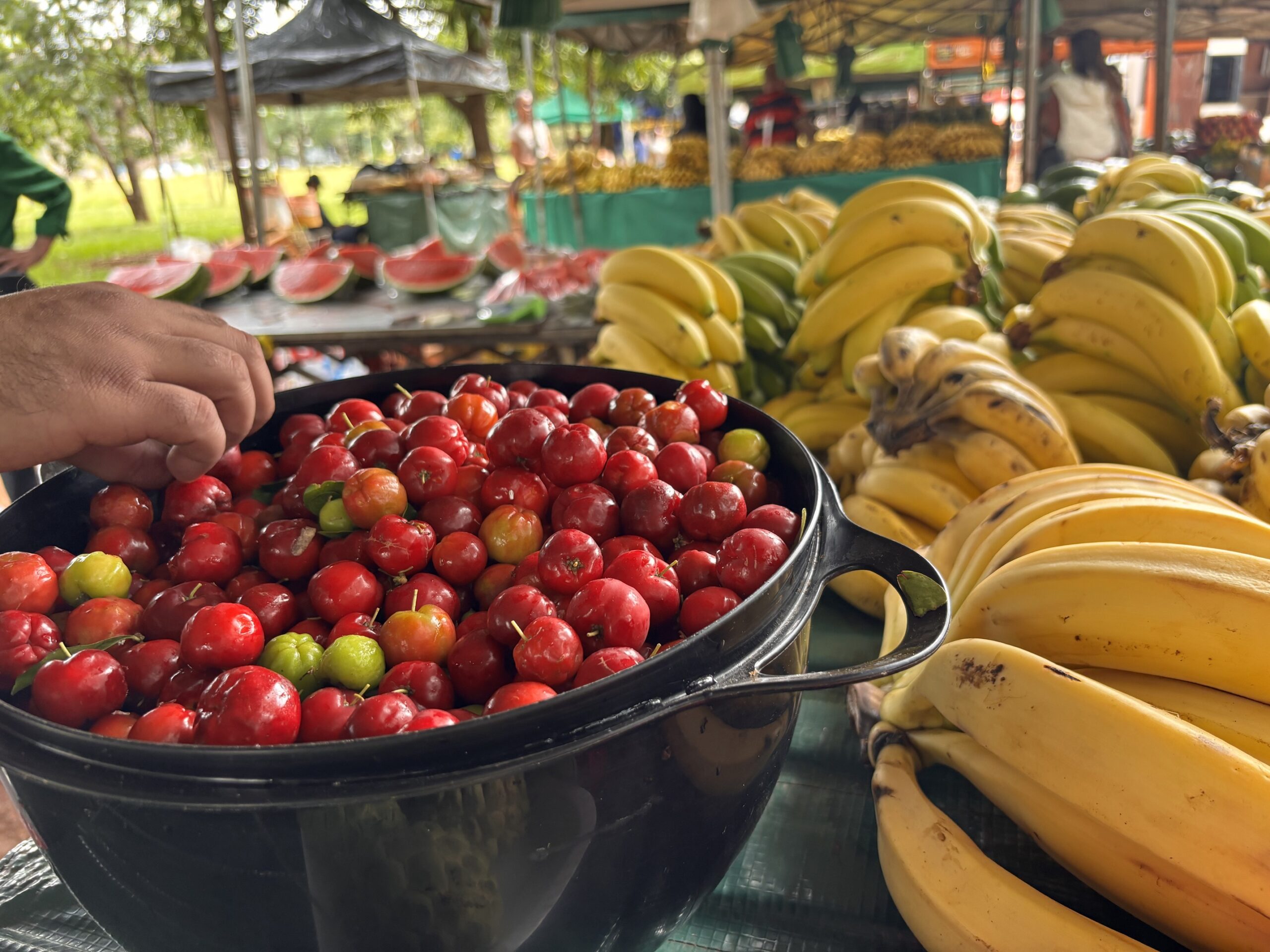
“Food reveals the city. It exposes inequalities, territories, and who does or does not have access to basic rights. Thinking about urban food systems also means thinking about governance, social inclusion and local development,” said Eliene.
During the panel “Who Is Feeding the Cities?”, moderated by Luisa Haddad, co-founder and Executive Director of Pé de Feijão, Eliene was joined by Tânia Campos, founder of Casa Planta; Alan Abreu, ESG Lead at Grupo Azzas 2154; Isis Ferreira, Food Systems Advisor at the Instituto Comida do Amanhã; and Cleiray Wera Tukubo Fernando, a professor from the Southern Coast Indigenous Movement.
The discussion highlighted experiences and initiatives that connect local production, food culture, innovation and social impact within urban territories.
The City of the Future Festival was organised by Instituto Retomada, CNB and the City of São Paulo, with support from ADE Sampa and several institutional partners, including UNHCR, the UN Global Compact, SP Urbanismo, Insper Cidades, IABsp and CAU/SP.
The programme, held on 24 and 25 April, included debates on urban innovation, social justice, sustainability and public policy, reinforcing the role of cities in shaping a more inclusive future.