


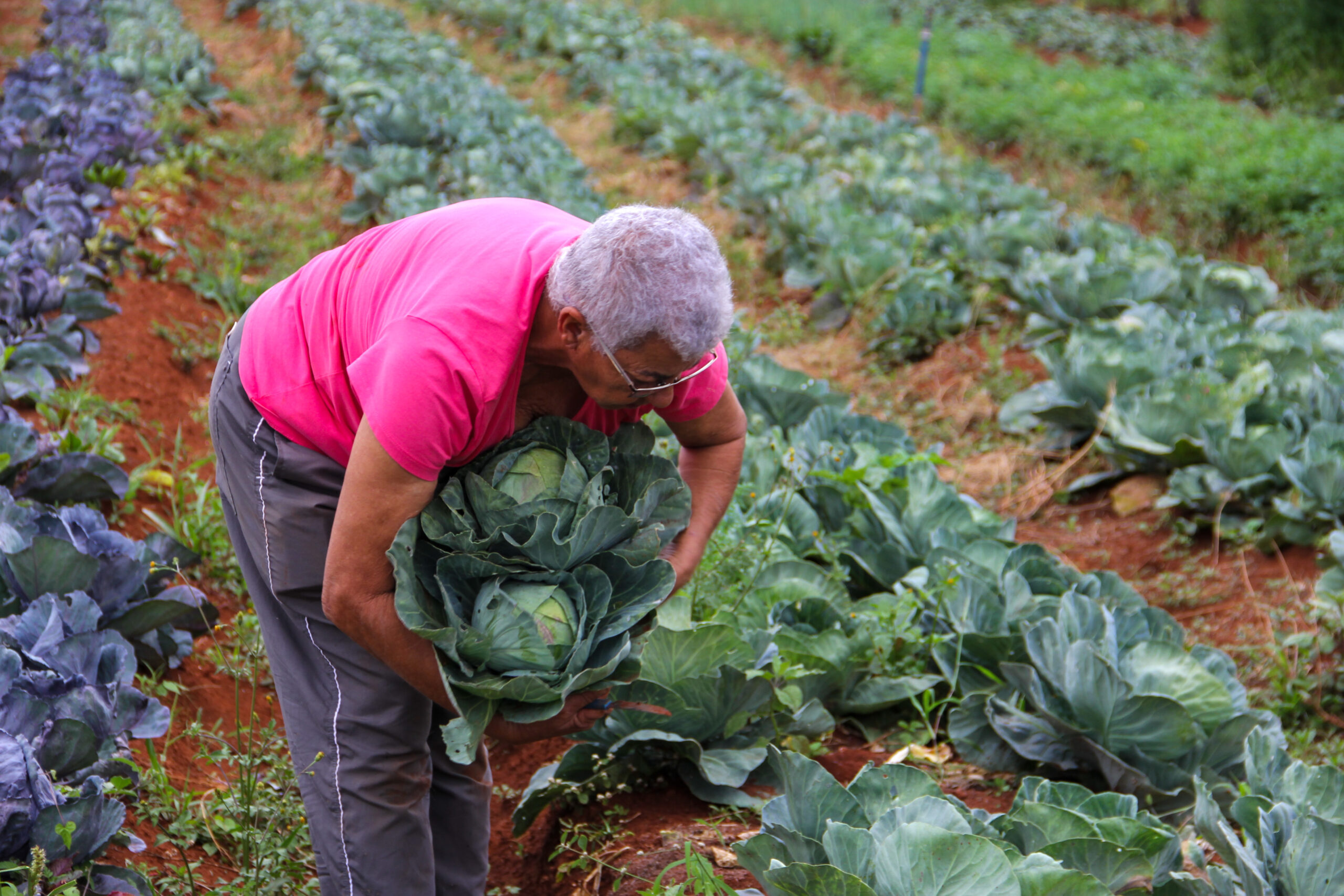
The Rome-based United Nations agencies – WFP, FAO and IFAD – in partnership with UN Women, celebrated the United Nations Day for South-South Cooperation with an international webinar dedicated to strengthening sustainable agri-food systems and the economic empowerment of rural women.
Under the theme “Scaling Impact, Sowing Equity: Rural Women Driving South-South and Triangular Cooperation for Sustainable Agrifood Systems”, the event, held online on 29 September, brought together representatives from governments, international organisations and beneficiaries of initiatives implemented in different countries to discuss how South-South and Triangular Cooperation can accelerate rural development and gender equality.
Highlights
During the main panel, participants from the Joint Programme to Accelerate Progress towards the Economic Empowerment of Rural Women (JP RWEE) shared practical experiences from different regions of the world.
Asel Kuttubaeva, an expert from Kyrgyzstan, presented the process of adapting the Business Action Learning for Innovation (BALI) methodology in several countries, demonstrating how locally developed approaches can be transferred and strengthened through peer learning.
Laxmi Kumari Sah, a Nepalese farmer and community leader, described how taking part in the programme had helped to broaden rural women’s access to financial education, leadership and economic opportunities, thereby strengthening their role as agents of change in their communities.
In a moving account, she explained that gender inequality in her region is so severe that she was not even allowed to ride a bicycle. Today, women farmers in the region are carving out a space for themselves to work independently in agriculture.
Senegal’s Ambassador to the RBA, Ngor Ndiaye, recalled his country’s experience of South-South cooperation with several Latin American countries, particularly Colombia, in programmes that strengthen women’s participation in agriculture and the development of their communities. He explained that he is intimately familiar with this struggle, as the son of a single mother who fought for her place in the workforce her whole life.
Representing the Government of Rwanda, Alice Mukamugema shared her country’s experience in implementing measures aimed at strengthening women’s participation in rural development and agricultural production, highlighting the results achieved through international cooperation.
The closing session was led by Vinicius Limongi, Head of Programmes at the WFP Centre of Excellence against Hunger in Brazil, who emphasised the importance of South-South cooperation in transforming experiences into concrete actions.
Vinicius also highlighted the role of rural women in transforming food systems. “Rural women are not merely beneficiaries of development initiatives. They are agents of change. When they have access to knowledge, funding, leadership opportunities and productive resources, entire communities benefit,” he emphasised.
Held annually since 2017, the joint celebration organised by the Rome-based agencies has established itself as a forum for promoting the exchange of experiences and strengthening partnerships aimed at eradicating hunger, ensuring food security and fostering sustainable rural development.