


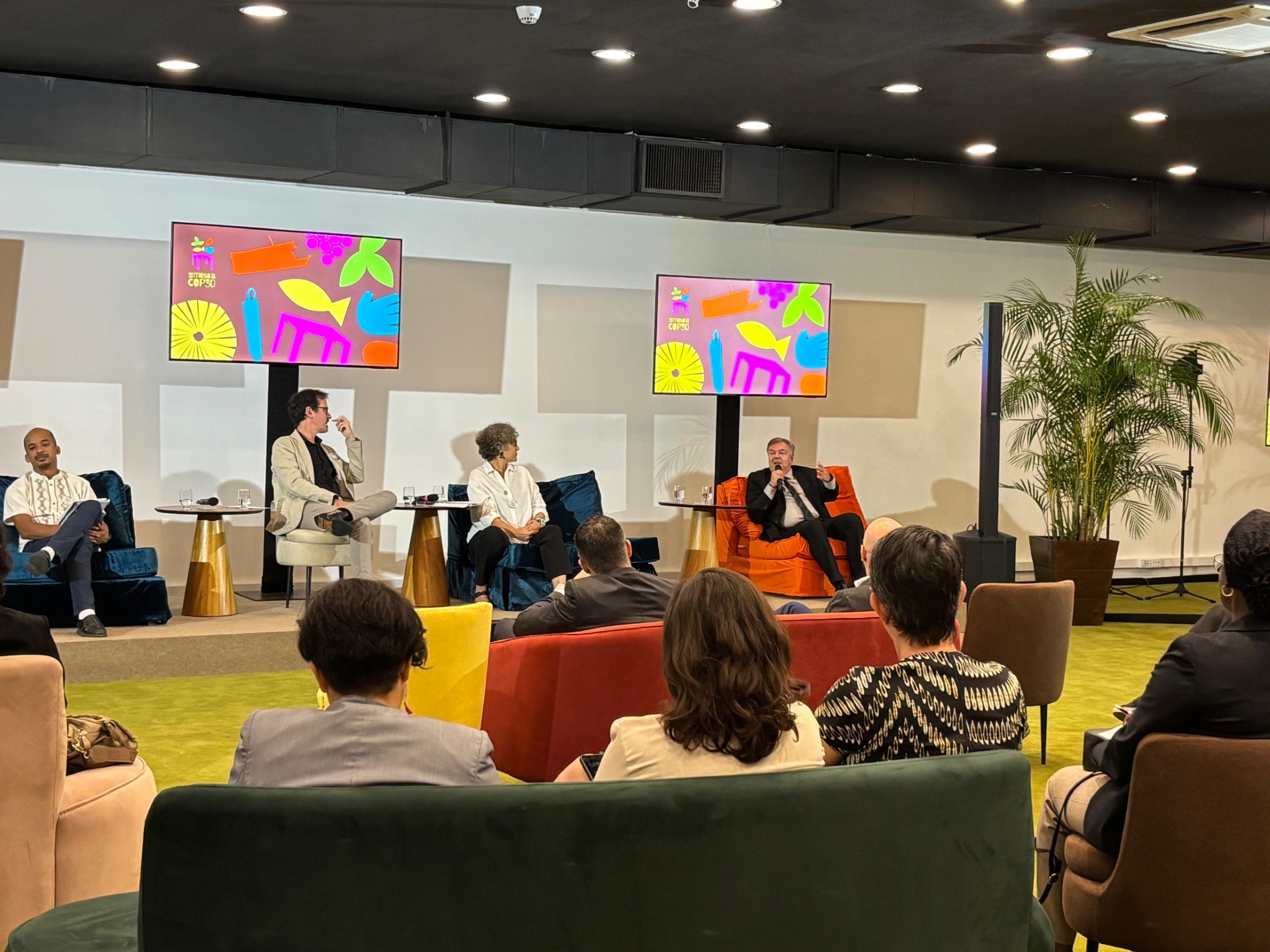
The WFP Centre of Excellence against Hunger in Brazil participated in the event ‘From the land to diplomacy: how food became climate action at COP30’, held on 22 January at the Itamaraty Palace in Brasilia. The meeting presented the main results of the Na Mesa da COP30 campaign, which brought family farming, agroecology and food systems to the centre of the international climate debate.
During the programme, the director of the Centre of Excellence, Daniel Balaban, highlighted the international relevance of Brazilian public food and nutrition policies, such as the PNAE and PAA, which strengthen the production of real food. In addition, he addressed the Centre’s work in disseminating these experiences globally and the importance of prioritising family farming as a climate action strategy.
The event brought together representatives from the government, multilateral organisations, research institutes and civil society to discuss the legacy and replicability of the Brazilian experience.
Among the panellists were Ana Toni (CEO of COP30), Anderson Amaro (CONSEA), Fabrício Muriana and Maurício Alcântara (Instituto Regenera), Saulo Ceolin and Lilian Chagas (MRE), Lilian Rahal (MDS), Luis Carrazza (Central do Cerrado), Francine Xavier (Comida do Amanhã) and Paulo Petersen (Special Envoy for Family Farming to COP30).
The presentation of innovations implemented during COP30, such as market reserves for family farming, the promotion of agroecological practices, and the creation of the Sociobiodiversity Restaurant, reinforced the idea that food has become a strategic tool for diplomacy and international cooperation. A publication systematising this experience will be released soon.
The event was organised by the Regenera Institute, the Food of Tomorrow Institute, and the Ministry of Foreign Affairs. According to the organisers, these initiatives demonstrate the transformative potential of food policies when integrated into the climate agenda.
Agroecological PNAE
The Centre of Excellence is a partner of the Regenera, Comida do Amanhã and Fome Zero institutes, which are developing the Agroecological PNAE project with support from the Rockefeller Foundation. The project is a pilot scheme that aims to use only agroecological products in school meals, thereby strengthening sustainable production chains, expanding opportunities for family farmers and promoting healthier school meals.