


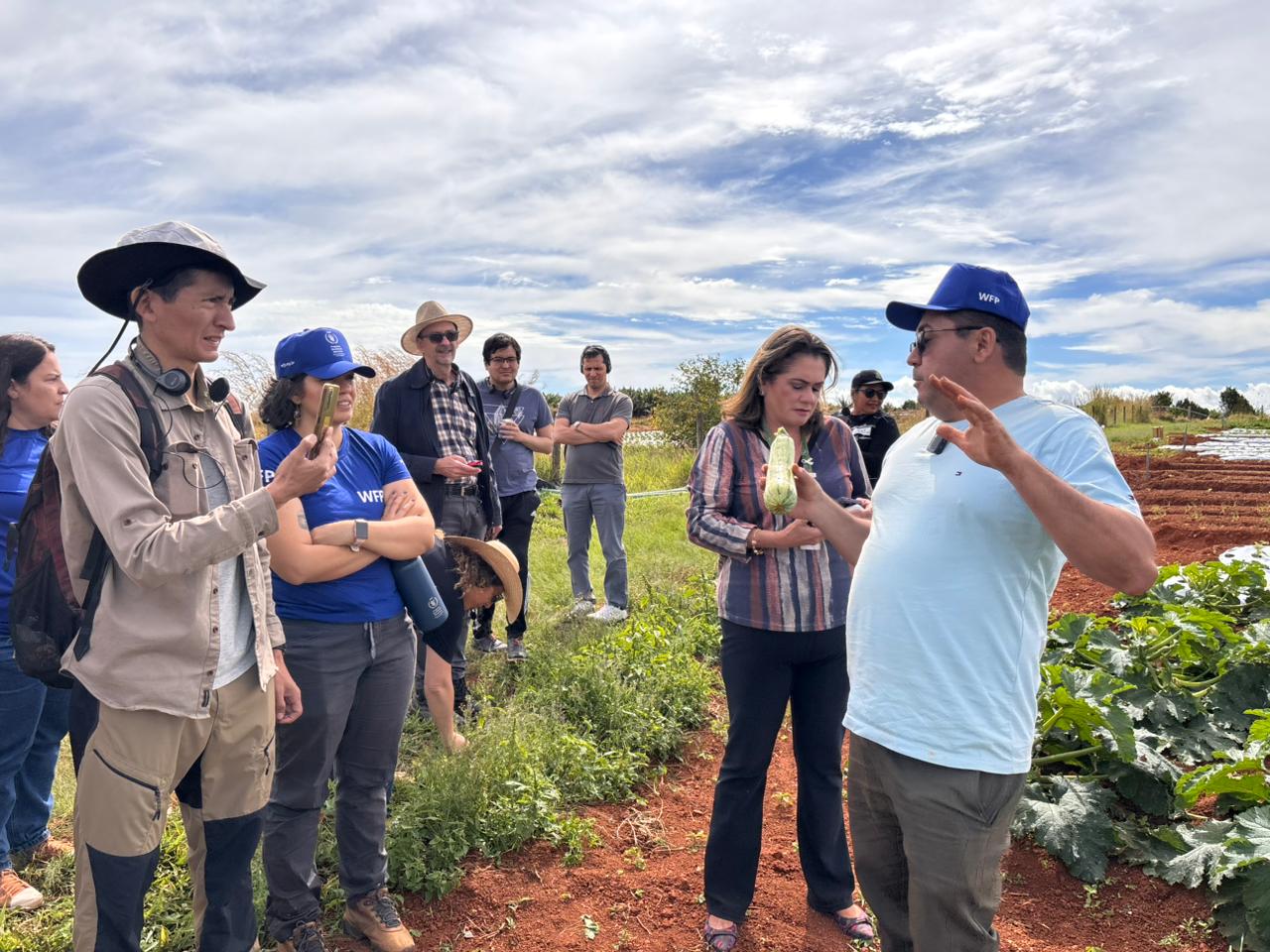
The development of Brazilian cross-sectoral policies for more resilient food systems was the main theme of the symposium, which was moderated by Eliene Sousa, a nutritionist and representative of the WFP’s Centre of Excellence against Hunger in Brazil. The symposium formed part of the 21st Latin American Nutrition Congress (SLAN 2026), one of the most important regional events in the field of food and nutritional security, taking place from 25 to 29 October in Santiago, Chile.
Entitled “Pathways to a sustainable and fair agri-food system: reflections on governance, public policy and climate action based on the Brazilian experience”, the symposium aimed to examine the relationship between food systems and climate change, and to explore cross-sectoral, training and governance policies as pathways towards a just, diverse, resilient and regenerative transition, drawing on the Brazilian case.
Latin America
The congress brings together researchers and professionals from different countries to discuss the progress and challenges facing food and nutrition in Latin America. This year, the congress’s theme was “Transforming food systems in Latin America: from evidence to action”, with a view to promoting scientific exchange and debate on healthy eating, sustainability, health and public policy.
The Congress highlighted that global food systems account for around one-third of greenhouse gas emissions and are the main driver of biodiversity loss. In Brazil, around three-quarters of emissions are directly or indirectly linked to the food system. However, food systems can also be a strategic ally for the human right to adequate food and for climate action.
In addition to the representative from the Centre of Excellence, the event featured experts from the World Food Programme (WFP) from various countries, in particular from the WFP’s regional office for Latin America and the Caribbean (LACRO), to share findings and discuss the challenges facing food and nutrition programmes in Latin America.
The Amazon
On 26 October, the Centre of Excellence also took part in the symposium ‘Urban and Amazonian food systems in Latin America: public policies, evidence and cooperation for access to and healthy consumption’, held as part of the InovaSAN project, developed in partnership with the Ministry of Development and Social Assistance, Family and the Fight against Hunger (MDS) and the Brazilian Cooperation Agency (ABC). The session brought together experts to discuss strategies for promoting access to and the consumption of healthy food in urban and Amazonian contexts across the region.
To discuss the progress and challenges involved in implementing public policies on food and nutrition, particularly school feeding, a side event to SLAN was held on 27 October, organised by LACRO. Representatives from the government and WFP country offices were in attendance. The recommendations include the need for innovative measures, involving multi-level and cross-sectoral governance.