


On 20 and 21 July, representatives of the Government of Guinea-Bissau took part in a virtual study visit to discuss school feeding policies and the integration of smallholder farming into school food supplies, with a focus on strengthening the African country’s National School Canteen Programme.
The initiative was organised by the WFP Centre of Excellence against Hunger in Brazil, in partnership with the National Fund for Educational Development (FNDE) and the Brazilian Cooperation Agency (ABC), with support from the WFP country office in Guinea-Bissau.
The event marked a continuation of the long-standing partnership between Brazil and Guinea-Bissau in the field of school feeding. The Centre of Excellence had previously hosted Guinean delegations on in-person study visits in 2012 and 2015. This time, the exchange took place online, enabling managers and technical staff from both countries to share experiences and discuss ways to enhance the sustainability of school feeding in Guinea-Bissau.
The aim of the visit was to present key aspects of Brazil’s National School Feeding Programme (PNAE) that could help to improve the Guinean programme, particularly in areas such as governance, funding, monitoring, community participation and procurement from family farms.
Authorities
On the first day, 20 July, officials from Brazil and Guinea-Bissau attended the opening session.
The meeting was attended by representatives from ABC, FNDE, the Brazilian Embassy in Guinea-Bissau, the WFP and the Guinean government. During the meeting, the two countries’ national school feeding programmes were presented, enabling an exchange of experiences regarding progress, challenges and opportunities for strengthening food and nutritional security and education through school feeding.
For Renata Mainenti, General Coordinator of the National School Meals Programme – acting on behalf of the FNDE – the impact of school meals extends beyond the school gates. “We know that Brazil and Guinea-Bissau share much more than the Portuguese language; we share historical and cultural ties, as well as the conviction that investing in children is investing in the future of our societies,” she said.
“As Brazil’s ambassador, one point I would like to emphasise is that, for us, following best practice in this area is a legal requirement, expressly set out in the law that established the National School Feeding Programme and has remained in force across decades and governments,” said Pablo Duarte Cardoso, Brazil’s ambassador to Guinea-Bissau.
For Jacqueline Flentge, the WFP’s country director in Guinea-Bissau, however, this meeting symbolises much more than simply a gathering of the two countries. “Brazil’s experience in areas such as school feeding, smallholder farming, nutrition and local development continues to inspire countries around the world. For us, this exchange goes far beyond this meeting.”
The Director of the WFP Centre of Excellence against Hunger, Daniel Balaban, welcomed the opportunity for dialogue with Guinea-Bissau. “For our Centre of Excellence, Guinea-Bissau has always been a long-standing and very special partner. Over the last few years, we have built a relationship based on trust, cooperation and mutual learning, founded on the conviction that school feeding is a strategic investment,” he said.
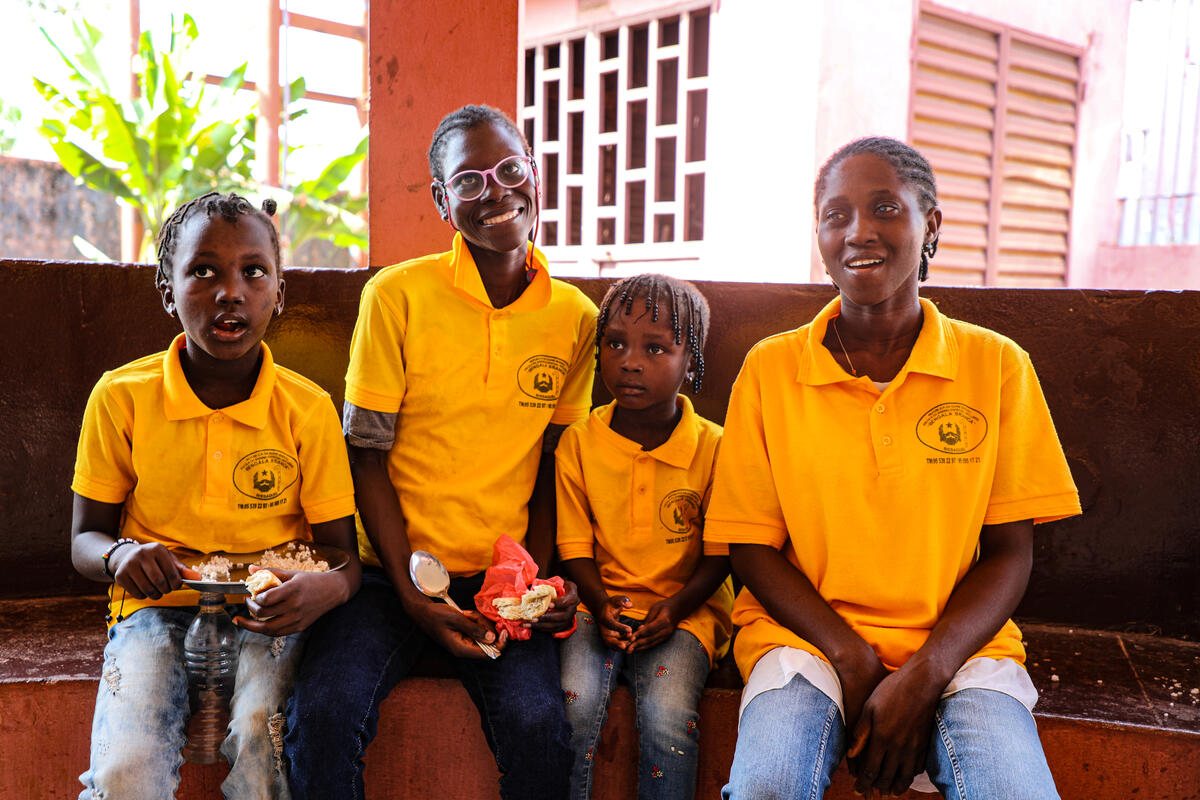
The National Director of School Feeding in Guinea-Bissau, Idocácia Embaló, presented figures on school feeding in her country. The National School Canteen Programme has been operating in Guinea-Bissau since 1994, as a result of close collaboration between the Government of Guinea-Bissau and the World Food Programme (WFP), and currently provides meals for around 197,000 children. “We greatly value this opportunity to learn about Brazil’s experience with the national school meals programme, which is an international benchmark due to its strong legal framework and funding model, as well as its successful integration with family farming,” said the director.
On the second day, 21 July, the discussions delved deeper into specific aspects of the Brazilian experience. FNDE experts presented recent developments in the PNAE relating to school meals for indigenous peoples and traditional communities, the inclusion of fish in school menus, and other updates to public policy.
The programme also included a question-and-answer session based on the six videos from the virtual tour – videos which cover all the guidelines of Brazil’s national school meals programme – followed by a discussion on the next steps for strengthening the country’s National School Canteen Programme.
Guinea-Bissau is seeking to improve the sustainability of its school meals programme and strengthen links with local food production. Currently, the National School Canteen Programme serves half of the country’s primary schools and is making progress in integrating smallholder cooperatives into the supply of food to schools.