


Between 30 November and 2 December, a Brazilian delegation will be in Indonesia to resume discussions with the Indonesian government on improving the Free Nutritious Meals Programme (MBG, as it is known in Indonesian) and to strengthen technical cooperation between the two countries in school meals.
The mission was originally scheduled for September but had to be cancelled due to volcanic activity in the country. The Brazilian delegation is now resuming the agenda, maintaining the previously defined objectives: to structure and formalise technical collaboration between Brazil and Indonesia to support the implementation and expansion of the MBG.
The initiative is facilitated by the WFP office in Indonesia and the WFP Centre of Excellence against Hunger in Brazil. The Brazilian delegation will include representatives from the Centre of Excellence, the National Fund for Educational Development (FNDE), the National Supply Company (Conab) and the Brazilian Cooperation Agency (ABC).
Expanding programme
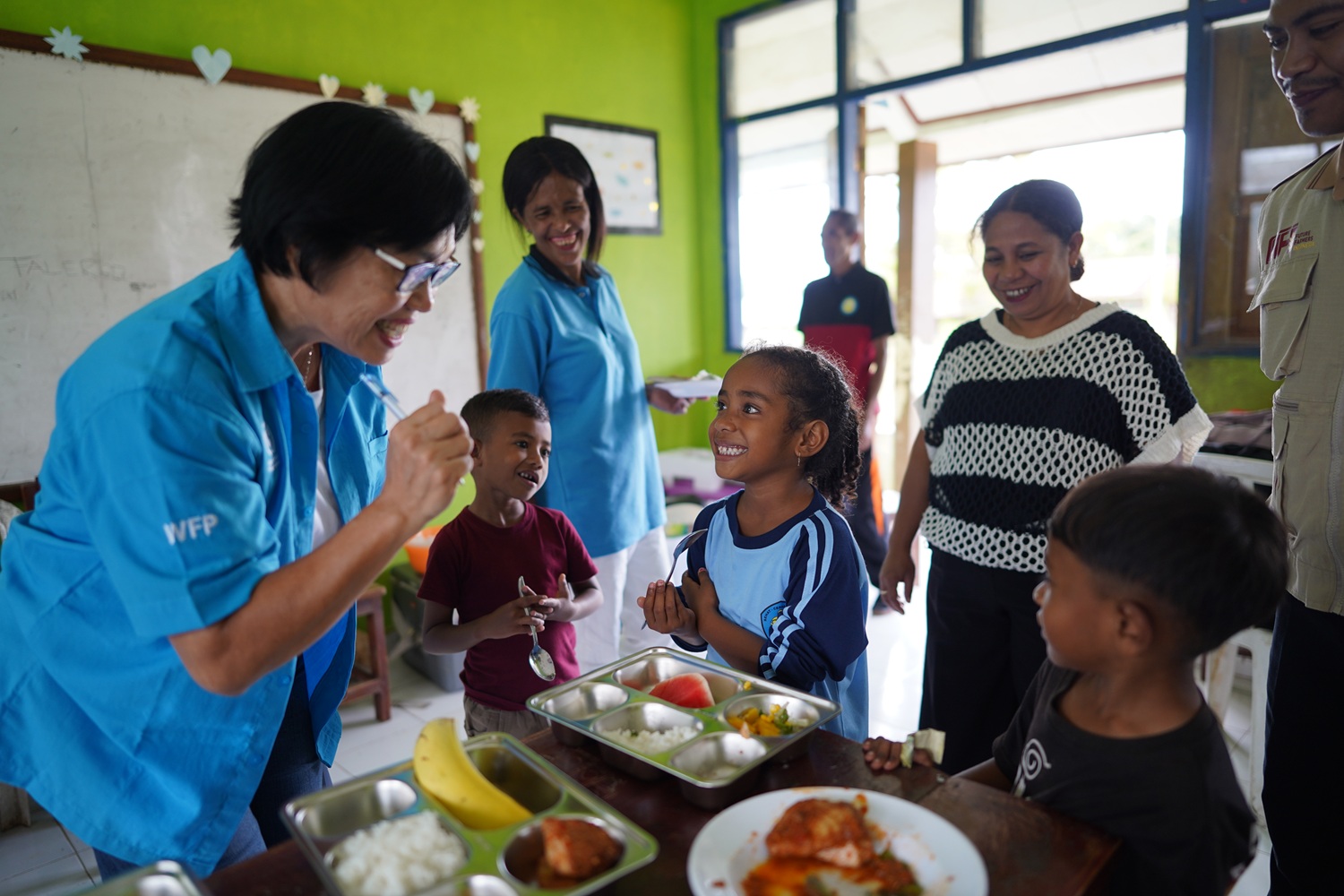
Launched by the Indonesian government in January 2025, the MBG is one of the world’s most ambitious school feeding and nutrition initiatives.
The programme aims to improve nutritional outcomes, expand health and nutrition education, strengthen food systems and contribute to poverty reduction by providing nutritious meals to school-age children, pregnant women, breastfeeding mothers and younger children.
By 2026, the programme was already reaching over 61 million beneficiaries and had approximately 24,000 central kitchens across the country. The target is to reach 83 million people, including around 65 million children from pre-school through to secondary school.
This rapid expansion highlights the importance of consolidating the lessons learnt from the initial implementation phase and translating strategic guidelines into operational solutions capable of addressing the country’s specific circumstances. Comprising more than 17,000 islands, Indonesia faces significant challenges in ensuring the distribution of meals to remote areas and maintaining quality and safety standards on a large scale.
Cooperation with Brazil
The dialogue between Brazil and Indonesia on school feeding has been developing over recent years. In August 2025, a technical exchange held in Jakarta brought together representatives from the Indonesian government, the FNDE, the Centre of Excellence and other partners, and identified priority areas for cooperation.
Among the topics are the adaptation of school feeding models for remote areas; food safety, quality and the reliability of distribution; strengthening public policies and governance; monitoring and evaluation; increasing procurement from local farmers; and strengthening public communication about the programme.
The Brazilian experience, particularly that developed through the National School Feeding Programme (PNAE), is expected to contribute to discussions on solutions that can be adapted to the Indonesian context. The cooperation also aims to promote exchanges between experts from both countries to discuss implementation challenges, share experiences and identify practices that can support the development of the MBG.
Joint roadmap
The resumption of the mission should enable Brazilian experts and representatives of the Indonesian government to explore the priorities already identified in greater depth and make progress in defining concrete forms of cooperation.
The aim is to draw up a joint roadmap setting out areas of technical assistance, responsibilities, coordination mechanisms and the next steps for collaboration between the two countries.
On behalf of the Centre of Excellence, the meeting will be coordinated by Ana Clara Cathalat, Policy and Programmes Officer, and Mariana de Carvalho, Programmes Assistant.
It is hoped that the discussions will help transform the exchange of experiences into structured, long-term technical cooperation, supporting Indonesia in consolidating and improving its school feeding programme.