


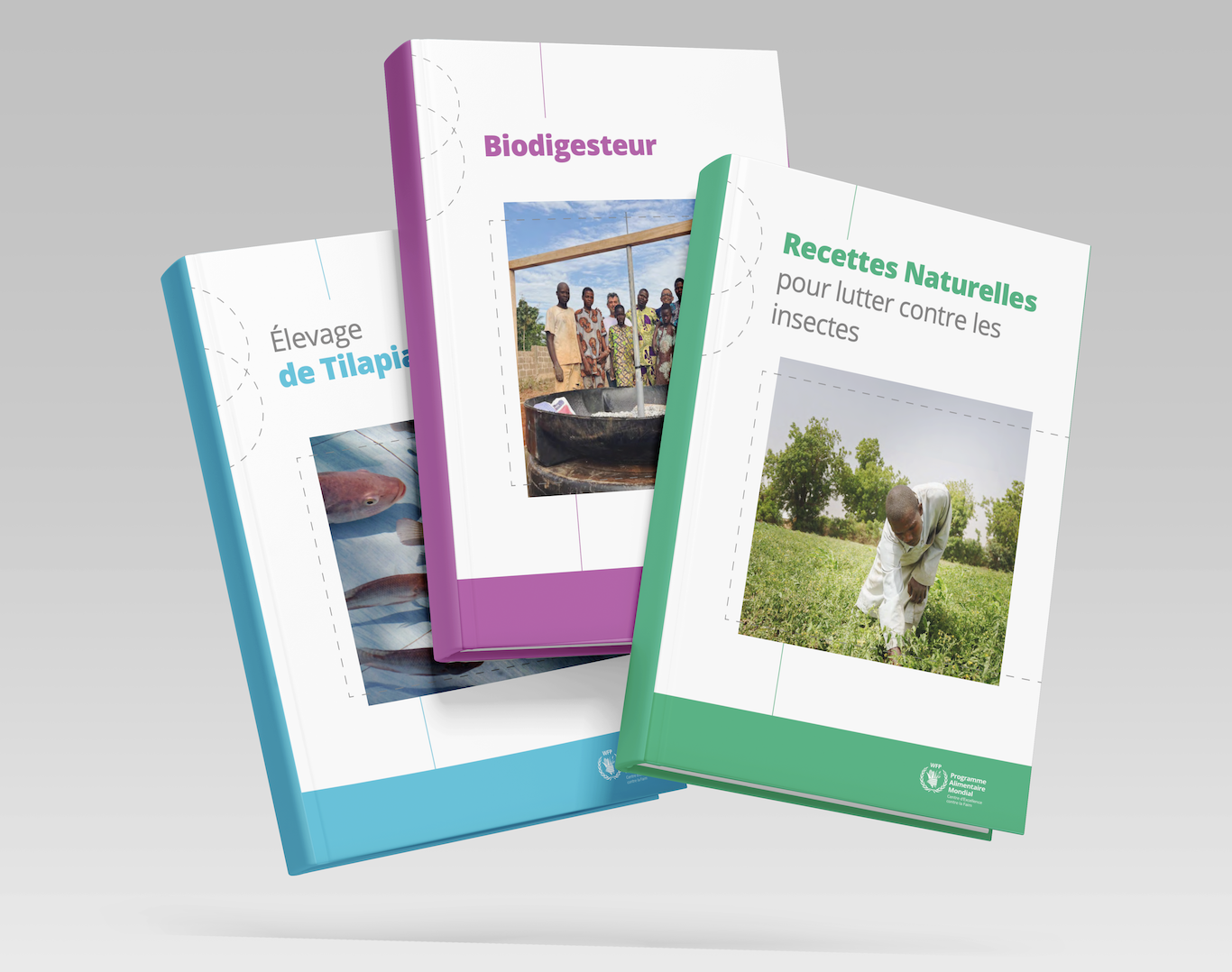
 The WFP Centre of Excellence against Hunger in Brazil publishes on its website the ‘Social Technologies’ series available from 8 October; this comprises eight practical guides aimed at promoting school feeding based on sustainable production practices. Initially available in French, the publications present low-cost, easy-to-implement solutions with proven effectiveness for countries facing the impacts of climate change, particularly in semi-arid regions.
The collection provides essential information on various social technologies, such as rainwater harvesting cisterns, biodigesters, eco-friendly stoves, low-cost vegetable gardens, biopesticides, and systems for rearing poultry, pigs and fish. The aim is to strengthen food security, support the livelihoods of rural communities and promote more resilient food systems.
According to Nayla Almeida, Programme Officer at the Centre of Excellence and production coordinator for the series, the guides are the result of extensive fieldwork carried out in partnership with experts who monitored the implementation of these technologies in various African contexts, with support from the WFP country office and local governments.
“This series is the result of a joint effort with consultants Luderlândio de Andrade Silva and Ricardo Pereira de Farias, who have monitored and implemented social technologies in countries such as Benin and São Tomé and Príncipe. The experience gained in the field was crucial to documenting practical, adaptable solutions with the potential to be replicated in different contexts,” she said.
With the publication of the series, the Centre of Excellence aims to broaden the exchange of knowledge and support governments, partners and communities in adopting sustainable solutions that contribute to strengthening school feeding programmes and local agriculture.