


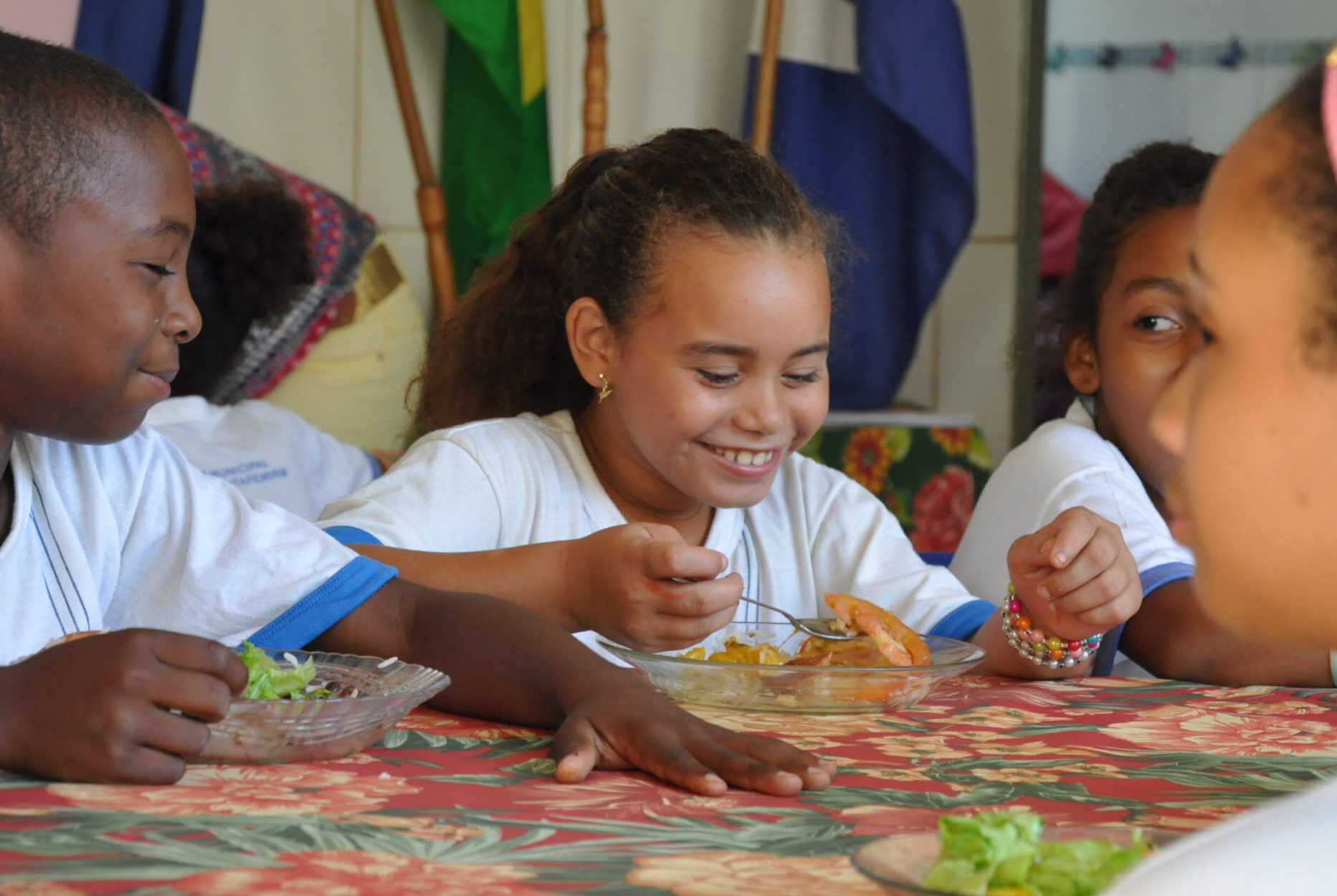
 The “School Meals Campaign”, the precursor to the current National School Feeding Programme (PNAE), began on 31 March 1955, exactly 71 years ago. Today, the PNAE is firmly established in the country as one of the main benchmarks for food and nutritional security and is also a global benchmark in the promotion of healthy and sustainable eating in schools.
The process of devising and institutionalising school feeding policy in Brazil, between 1940 and 1955, involved the participation of doctors, nutritionists and dietitians. Led by Josué de Castro, these professionals conducted studies and research on school feeding and were involved in the management of institutions responsible for implementing this public policy.
The inclusion of nutritionists in the PNAE, based on legal provisions, is a more recent development, which began in the early 1990s, when food was recognised as a human right under the 1988 Constitution.
For over seven decades, the PNAE has been coordinated by the Ministry of Education’s National Fund for Educational Development (FNDE) and is closely linked to the National Policy on Food and Nutritional Security (PNSAN) and the National Education Policy.
The passing of Law 11,947 of 2009, which established the school meals programme, and its accompanying resolutions, marked significant advances for the PNAE. The first of these was the extension of the programme to the entire public basic education system and to youth and adult education.
The 2009 law also included food and nutrition education in the school curriculum, strengthened the social oversight carried out by school meal councils, guaranteed a minimum nutritional intake of 20% of students’ daily requirements, and defined nutritional guidelines for food procurement, establishing categories of restrictions and prohibition for food products.
From 2025, Law 15,226 raised the minimum percentage of PNAE funds allocated to the procurement of family farming products from 30% to 45%, prioritising purchases from agrarian reform settlements, traditional indigenous communities and quilombola communities. Constantly improving, the Programme also respects food cultures and traditions, providing pupils with food that values regional dietary habits.