


Between 18 and 22 May, the Centre of Excellence will take part in a visit to Armenia bringing together high-level representatives from Armenia, Kyrgyzstan and Tajikistan, with a focus on exchanging experiences and strengthening sustainable national school feeding models.
The Centre’s director, Daniel Balaban, is taking part in the mission, highlighting the institution’s role in promoting technical cooperation for the development of policies to combat hunger, particularly through national school feeding programmes based on local family farming production. The initiative has been one of the main strategies for promoting food security, rural development and improved child nutrition.
Also, part of the mission is programme officer Maria Giulia Senesi, who is responsible for presenting the Centre of Excellence’s main areas of work and the strategies adopted in South-South Cooperation to strengthen public policies.
The programme includes meetings with ministries and government officials, high-level panels, field visits to schools and local initiatives, as well as thematic workshops, enabling a practical analysis of school feeding models and their implementation in different contexts.
Brazil-Armenia Cooperation
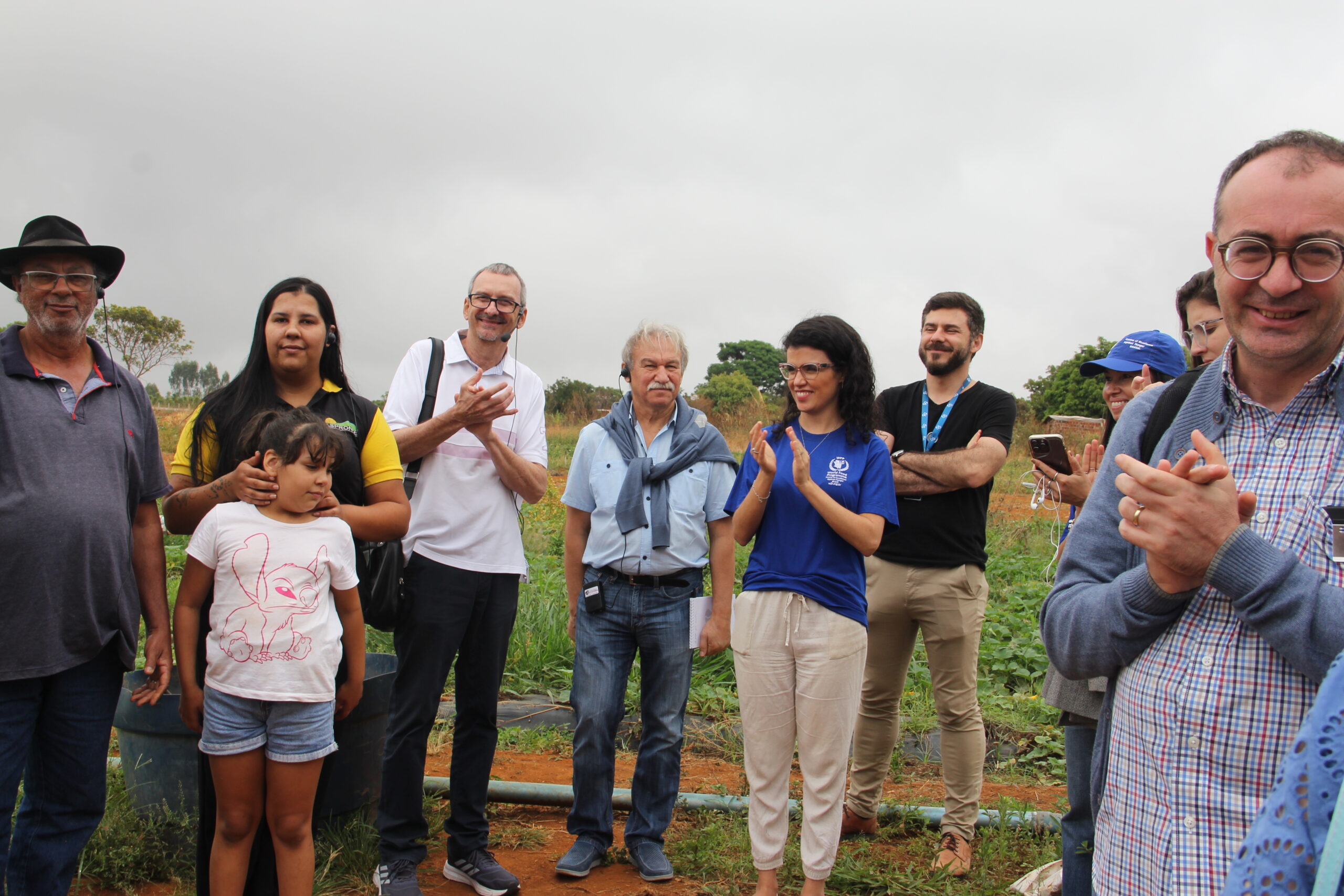
The visit forms part of an ongoing process of cooperation between Brazil and Armenia. The exchanges began in January 2024 with Virtual Visits, a tool provided by the Centre of Excellence for the exchange of knowledge between countries, optimising financial resources and identifying priorities for cooperation and technical support on issues relating to school meals and family farming.
The two virtual visits held facilitated remote meetings in which Armenian and Brazilian representatives were able to exchange information on Brazilian public policies in this area. This interest led, in October of the same year, to the dispatch of a delegation to Brasília for a study visit, where they were able to gain first-hand insight into the National School Feeding Programme (PNAE).
Now, with the international mission, the dialogue is moving into a phase of technical deepening and advocacy, also involving other countries in the region, with the aim of strengthening good practices in school feeding programmes as structural public policies to combat hunger and malnutrition.