


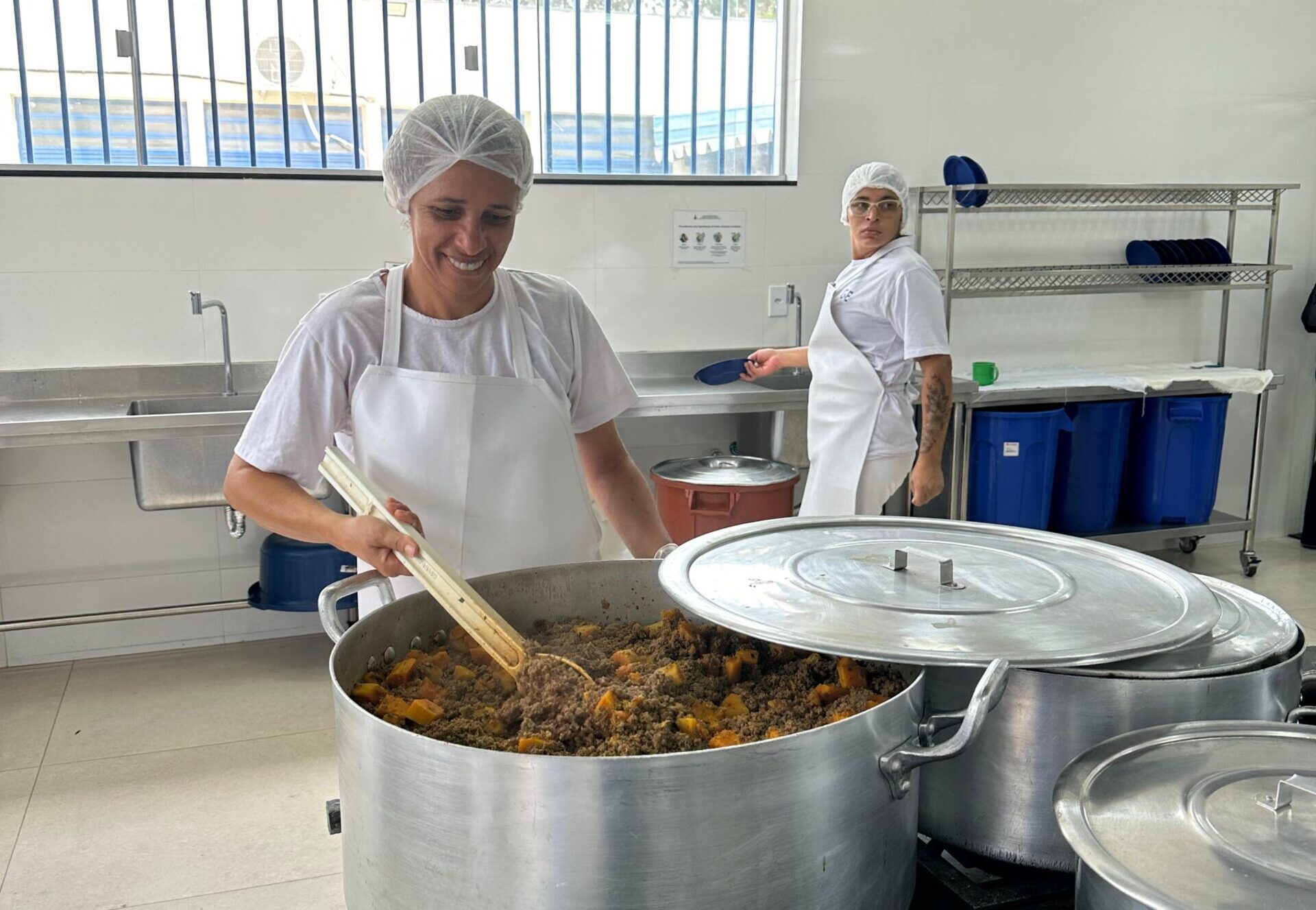
On School Cook’s Day, celebrated on 30 October, the WFP Centre of Excellence against Hunger in Brazil pays tribute to the thousands of professionals who, every day through the National School Feeding Programme (PNAE), ensure healthy meals and a warm welcome for millions of pupils. Far beyond simply preparing food, these professionals play a vital role in promoting food and nutritional security.
Over recent years, the Centre of Excellence has developed initiatives that recognise these professionals and strengthen school feeding programmes in Brazil and other countries. One of the most recent examples is the reality TV show “Escola de Sabores”, produced in partnership with the National Fund for Educational Development (FNDE) and the Brazilian Cooperation Agency (ABC).
The aim of “Escola de Sabores” was to raise the profile of the work carried out by school cooks from indigenous, Quilombola and riverside communities, highlighting their knowledge, culinary traditions and contribution to school meals that are appropriate to the local culture, as well as emphasising the partnership between school cooks and nutritionists in the process of providing healthy and appropriate meals.
The reality programme crossed borders by organising an exchange with school cooks and nutritionists from countries such as Honduras and São Tomé and Príncipe. The programme’s participants prepared tasty dishes using ingredients that are typical and common in these countries, such as plantains, red beans, fish and coconut, fostering a cultural exchange imbued with affection, memory and tradition between the countries.
Training
Another example of the exchange of experiences through South-South cooperation took place in 2025, when the Centre of Excellence coordinated a training course on nutrition for school meals in São Tomé and Príncipe, in partnership with the FNDE and ABC, and with support from the WFP in São Tomé and Príncipe.
The training equipped professionals from the National School Food and Health Programme (PNASE) to plan menus, monitor nutritional initiatives and integrate locally produced food into school meals. The initiative included theoretical sessions, practical workshops and technical visits, with the aim of strengthening the provision of healthy meals for thousands of children in São Tomé and Príncipe.
For Sineide Neres, a nutritionist at the Centre of Excellence’s Programmes unit, the work of school cooks is essential to the success of any school feeding programme.
“School cooks also play a key role in school meals. They are the ones who turn guidelines, menus drawn up by nutritionists and ingredients into meals that end up on pupils’ plates every day. Their knowledge, dedication and care make all the difference in ensuring that children and teenagers have access to healthy, nutritious and welcoming meals. Valuing these professionals means strengthening education, food and nutritional security, and the future of the younger generations,” she said.