


The director and representative of the World Food Programme’s (WFP) Centre of Excellence against Hunger in Brazil, Daniel Balaban, is taking part as a panelist at a side event at the 17th Conference of the Parties to the Convention on Biological Diversity (COP17), to be held in Yerevan, Armenia, from 19 to 30 October 2026.
The invitation was extended by the WFP office in Armenia so that Brazil can share its experience in linking school feeding, food security, local agriculture and biodiversity conservation.
COP17 is the main meeting of the signatory countries to the Convention on Biological (CBD), an international treaty that guides global action towards the conservation of biodiversity, the sustainable use of natural resources and the fair sharing of the benefits derived from these resources.
The conference brings together governments, international organisations, academia, civil society and the private sector to discuss strategies and commitments aimed at protecting global biodiversity.
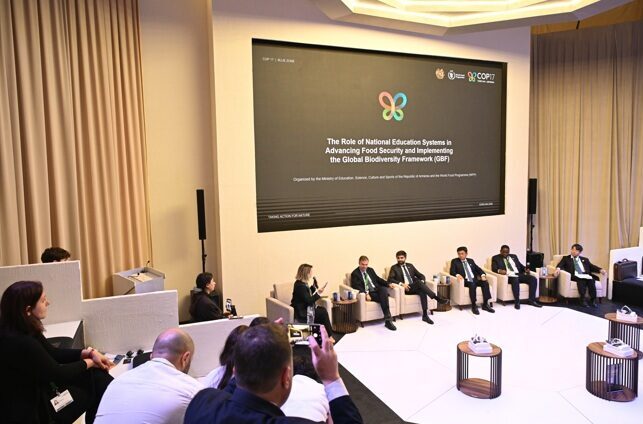
During the conference, the WFP will host a side event entitled ‘The Role of National Education Systems in Advancing Food Security and Implementing the Global Biodiversity Framework’, with sessions on 19 and 20 October.
The meeting will discuss how school feeding programmes can help improve nutrition, strengthen local food systems and support the implementation of the Global Biodiversity Framework. During the panel discussion, Daniel Balaban will present Brazil’s experience in using school feeding as a tool for sustainable development.
Topics under discussion will include the contribution of school meals to food and nutritional security, public procurement from family farms, the promotion of food and agricultural diversity, and the development of more resilient and inclusive food systems. The aim is to demonstrate how integrated public policies can link education, local food production and biodiversity conservation.
“Brazil has demonstrated that school meals can have an impact that goes far beyond nutrition. When we link schools, family farmers and public policies, we promote food security, strengthen local economies and encourage more sustainable production practices, whilst also contributing to the preservation of biodiversity,” said Daniel Balaban.
According to the director of the Centre of Excellence, the Brazilian experience offers valuable lessons for countries seeking to integrate human development and environmental sustainability agendas.
“School feeding is a practical platform for transforming food systems. By creating stable markets for local producers and expanding children’s access to a varied and healthy diet, governments can make progress simultaneously on the objectives of education, social inclusion, food security and biodiversity,” said Balaban.
The event will bring together representatives from governments, United Nations agencies, development partners, researchers and civil society organisations to share national experiences and identify opportunities for cooperation, investment and greater coherence between public policies relating to food, education and the environment.