


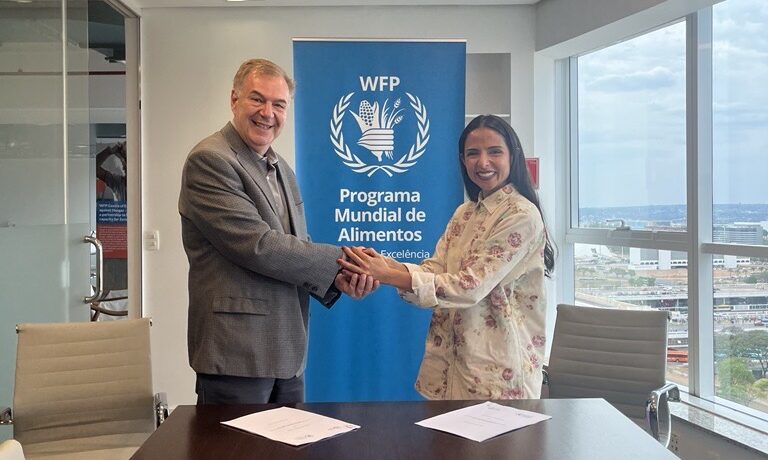
On 22 September, the WFP Centre of Excellence against Hunger in Brazil and the Pact Against Hunger Institute signed a Memorandum of Understanding (MoU) to strengthen technical cooperation between the institutions on issues relating to food and nutritional security, healthy eating, nutrition, resilient food systems and the reduction of food loss and waste.
The agreement establishes a general framework for collaboration between the organisations, focusing on the production and dissemination of knowledge, the systematisation of evidence, the exchange of best practices, the conduct of studies, technical dialogues and joint institutional communication initiatives.
The partnership also provides for coordination with various public, private, academic and civil society stakeholders, always on issues consistent with the institutions’ mandates. The cooperation will seek to enhance the quality of public debate and strengthen initiatives aimed at promoting food and nutritional security.
For the executive director of the Pact Against Hunger, Maria Renata Coutinho de Moraes Siqueira, the partnership represents an opportunity to expand collaboration between organisations working on complementary agendas. “Pooling our efforts and expertise strengthens our ability to promote effective solutions to tackle hunger and mobilise different stakeholders around a common goal: ensuring the right to adequate food for all,” she said.
The director of the WFP Centre of Excellence in Brazil, Daniel Balaban, highlighted the shared objectives between the organisations. “This partnership reinforces our commitment to supporting innovative and sustainable strategies for promoting food security. By working together, we can harness knowledge, experience and cooperation networks capable of generating lasting impacts,” he said.
Among the areas of cooperation set out in the Memorandum are the production of technical notes, studies, policy briefs and joint publications; the organisation of seminars, workshops and technical dialogues; and the development of communication initiatives and the dissemination of knowledge on food and nutritional security, healthy eating and resilient food systems.