


Between 18 and 22 May, Armenia hosted an international mission aimed at strengthening school feeding programmes, attended by Daniel Balaban, Director of the WFP Centre of Excellence against Hunger in Brazil, and Programme Officer Maria Giulia Senesi. The initiative also brought together government officials from two other countries – Kyrgyzstan and Tajikistan – with the aim of promoting the exchange of experiences and expanding international cooperation in this area.
Organised in partnership with the Armenian government and the World Food Programme (WFP), the visit highlighted the strategic role of the Centre of Excellence in supporting countries seeking to transform their school feeding programmes into sustainable, nationally led public policies.
Throughout the mission, the delegations took part in field visits to learn about concrete initiatives that integrate school feeding, local production and community development. One of the highlights was a visit to a wholemeal flour mill, part of the value chain supported by WFP, which is responsible for supplying the ingredient for the meals of over 36,000 school-age children in the country.
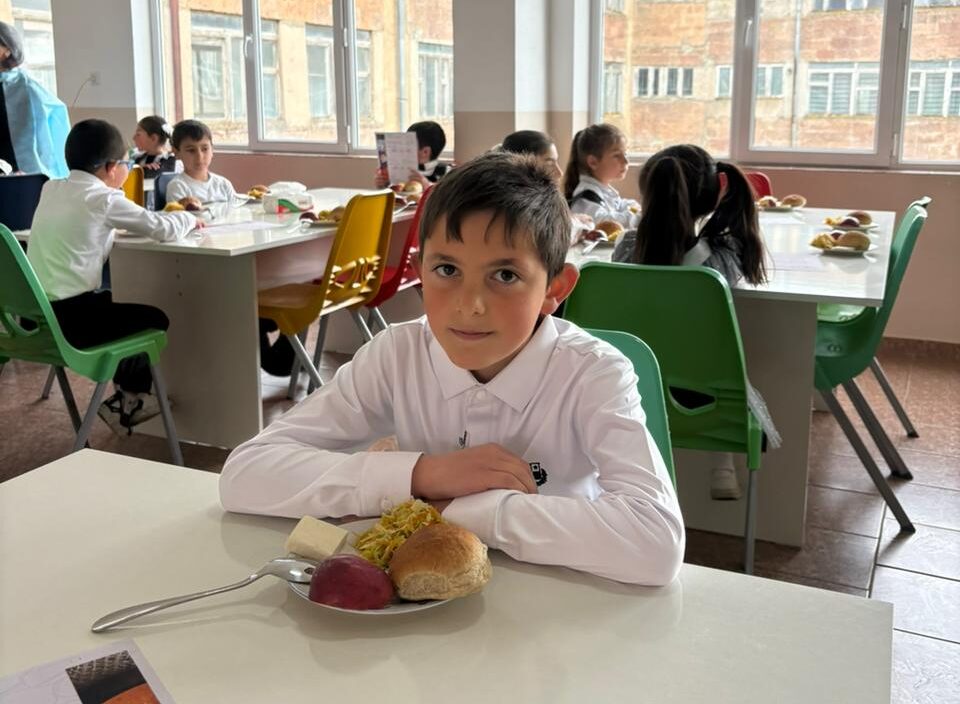
Another highlight of the programme was a visit to three schools, where children are provided with school meals made from local produce, and a trip to the Training Centre for the production of whole foods. The centre acts as a training hub for bakeries, schools and producers, promoting healthier diets and encouraging integration between local agriculture and school meals.
For Daniel Balaban, the Armenian experience demonstrates the tangible impact of international partnerships. “Cooperation between countries is essential to transforming school feeding programmes into sustainable public policies. When we share knowledge and solutions, we accelerate the path to ensuring adequate nutrition, quality education and local development,” he said.
The WFP Country Director in Armenia, Leila Meliouh, noted that school feeding using local produce constitutes a vital social safety net. “School feeding programmes offer a reliable foundation for economic relief, ensuring that food insecurity never becomes an obstacle to people’s potential. When a child is fed, a family is supported and communities are strengthened,” she said.
Maria Giulia Senesi highlighted that, during the mission, various innovations and methods of implementing school feeding were discussed, demonstrating a range of possibilities for different countries. “Sharing experiences shows that it is possible to adapt best practices to different contexts, whilst always respecting national circumstances,” she said.