


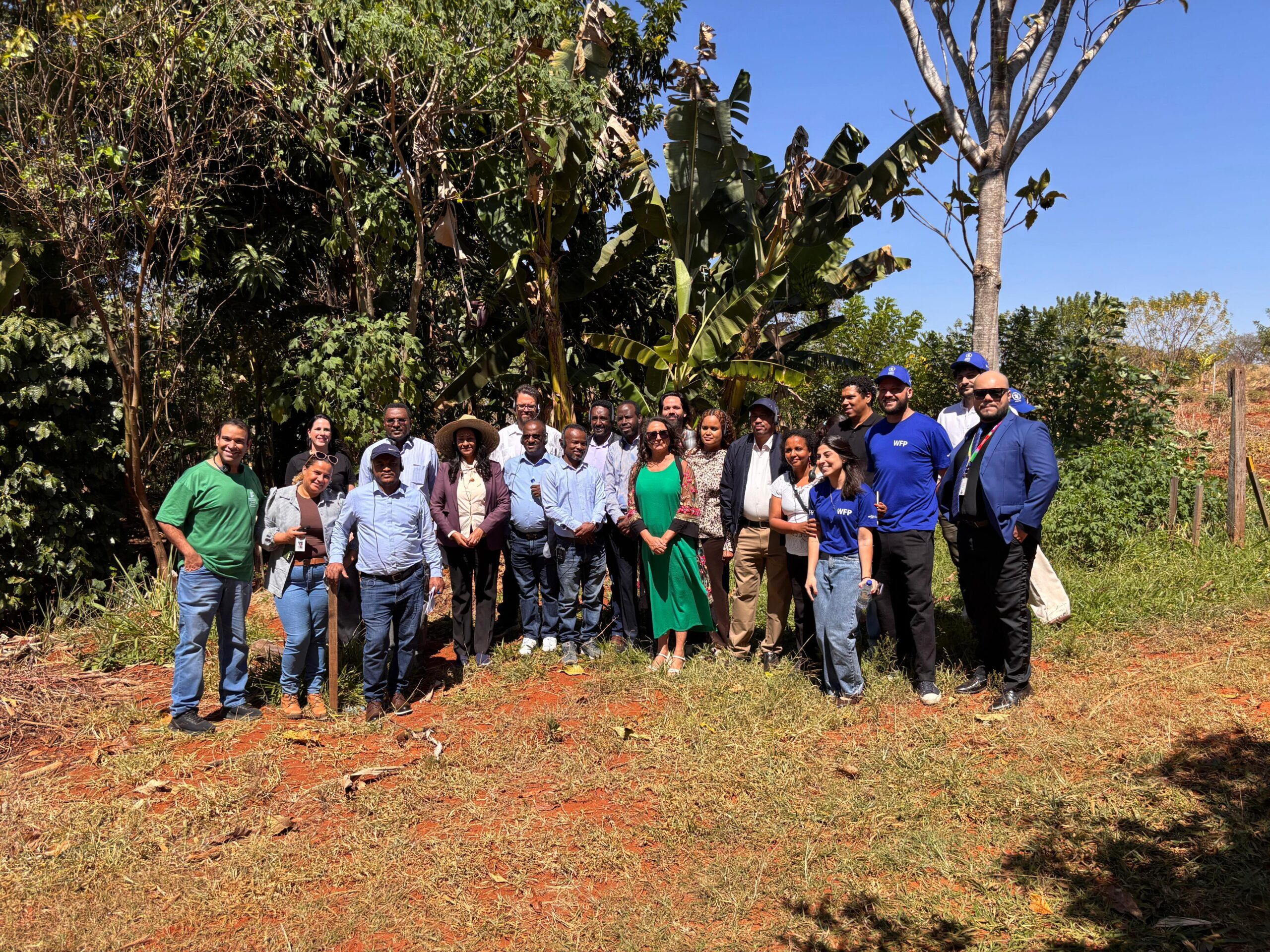
 A high-level delegation from Ethiopia undertook a study visit between 4 and 11 August, aimed at strengthening the African country’s national school feeding programme.
The mission brought together representatives from the Ministry of Education, regional governments and the World Food Programme (WFP) to gain first-hand insight into Brazil’s experience with school feeding, focusing on funding mechanisms, governance and its integration with family farming.
The initiative was organised by the WFP Centre of Excellence against Hunger in Brazil, the WFP office in Ethiopia, the National Fund for Education Development (FNDE), the Brazilian Cooperation Agency (ABC), and was carried out in partnership with the Ministry of Education, the Federal District Government’s Department of Education, and the Federal District Agency for Technical Assistance and Rural Extension (Emater-DF).
During the visit, the delegation gained a deeper understanding of the National School Feeding Programme (PNAE), which is regarded as an international benchmark for its sustainability and universality, both of which are enshrined in law. Furthermore, the PNAE promotes participation and social oversight, local development through the purchase of food from family farms, and food and nutrition education initiatives.
For the PNAE’s national coordinator, Karine Santos, sharing experiences is essential for identifying common challenges, disseminating innovative solutions and highlighting best practices developed in different regions. “This exchange strengthens the programme’s management and broadens its impact on promoting food and nutritional security for pupils,” she said.
Ethiopia’s interest reflected an effort to expand its Home-Grown School Feeding programme, a model that links school feeding to local development and the production of smallholder farmers. The mission also sought to identify solutions to overcome challenges relating to the institutionalisation, funding and nationwide expansion of the programme.
Schools
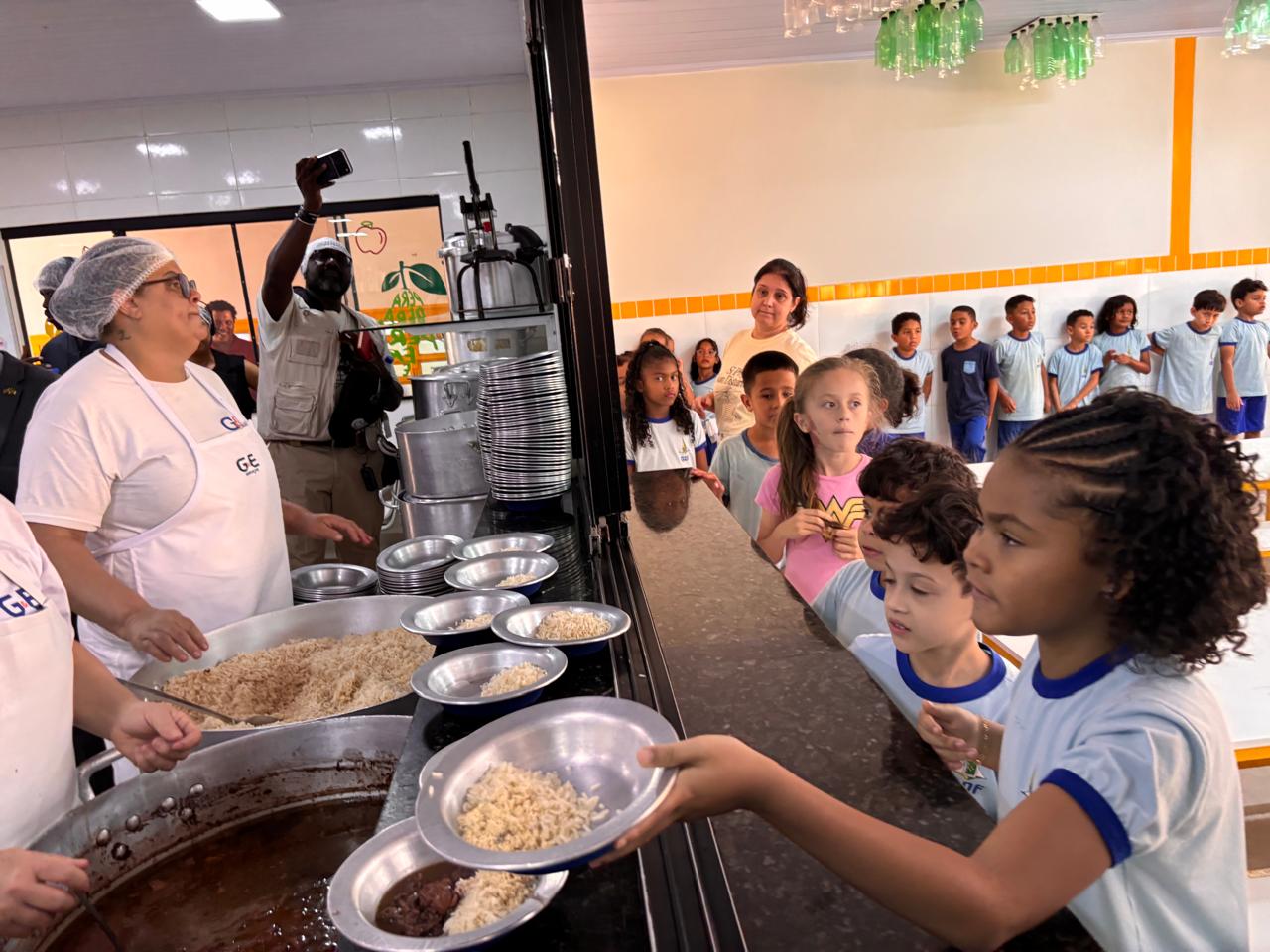
Activities included visits to Escola Classe Ipê and Escola Parque 303/304 Norte, where participants were able to observe the operation of the school kitchens, the food storage systems, and the preparation and serving of meals to pupils.
The delegation also spoke with nutritionists, managers, teachers, school cooks, school meals advisers, farmers and pupils to understand how nutritional guidelines are applied in practice and how the school community is involved in implementing the programme, as well as visiting school vegetable gardens and projects such as chicken coops and gardens that reuse rainwater in nursery schools.
Another highlight of the programme was the visit to the Federal Institute of Brasília (IFB), Planaltina Campus, where the Ethiopian representatives learnt about initiatives related to agroecology, sustainable agriculture, innovation and technical training.
The delegation visited the student canteen, attended presentations on school meals and toured the institution’s laboratories and production areas; the institution serves as a model for the integration of education, agriculture and regional development.
Agriculture
The itinerary included a visit to a cooperative, where the delegation observed first-hand agricultural production intended for the institutional market and school meals. There, they spoke with family farmers and representatives from Emater-DF to understand the mechanisms of production organisation, marketing, price formation and the supply of food to schools.
For Ethiopia’s Minister of Education, Ayelech Eshete, the visit demonstrated the potential of the Brazilian model, which is inspiring new investments to expand school meals in her country.
“We have learnt many lessons in Brazil. We launched our programme more recently, and we still need to strengthen our system. Our biggest challenge is funding the programme. However, the Ethiopian parliament recently passed a nutrition bill with a budget allocation, which will help us to move forward,” he said.
Ethiopia currently provides school meals to 8.4 million children, and the aim is to strengthen public policies and make the programme universal by 2030.
According to Robert Ackatia-Armah, WFP’s Senior Programme Officer in Ethiopia, the country is showing great interest in expanding its national school feeding programme.
“WFP has been supporting school feeding in the country for the past 15 years. Whereas previously WFP provided all the food for the children, the system has now evolved. In some regions, the WFP provides funding to enable education departments to implement the programme and, at the same time, we support the Ministry of Education with guidelines and technical assistance so that, at federal level, the programme can be rolled out to areas of the country where it does not yet exist.”
Evolution
The visit formed part of a long history of cooperation between Brazil and Ethiopia in the field of school feeding. Since 2013, the African country has been looking to Brazil for guidance to strengthen its nutrition and school feeding policies.
For the director of the Centre of Excellence, Daniel Balaban, monitoring the situation over the years demonstrates the process of continuous evolution in Ethiopia’s school feeding policy.
“The progress made demonstrates the value of cooperation based on trust and the exchange of experiences. The Centre of Excellence is proud to be working alongside the country in this process,” he said.
On this occasion, the visit focused on the large-scale implementation of the Ethiopian programme, particularly the link between school feeding and smallholder farming, which was considered one of the key lessons learnt during the mission.