


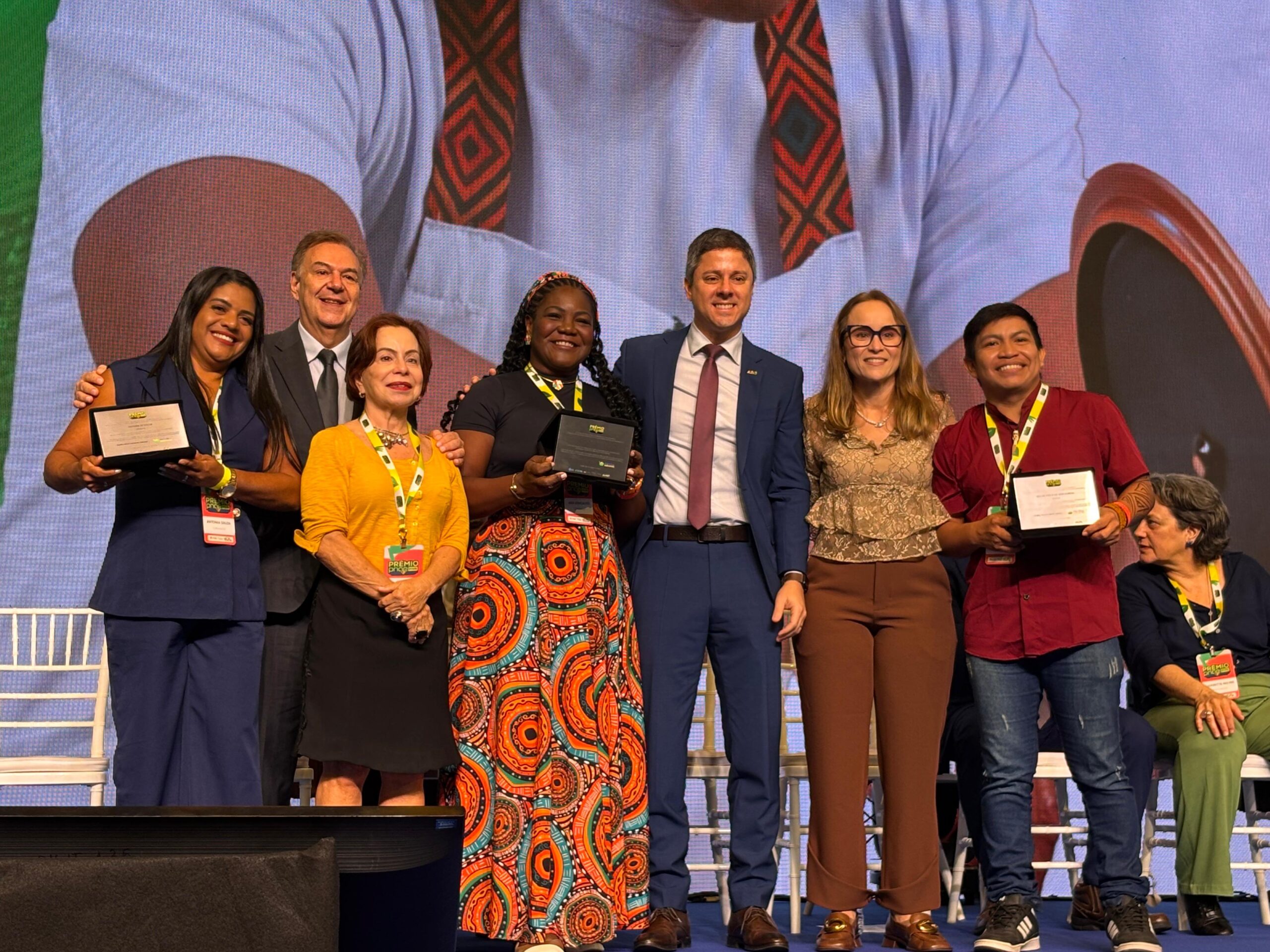
The reality show Escola de Sabores held its awards ceremony as part of the 2026 PNAE Awards, which took place on 23 June in Brasília. The event was organised by the NationalFund for Educational Development (FNDE) and brought together nutritionists, school cooks, students, managers and researchers from all regions of Brazil.
On this occasion, the CAE (School Food Council) Award was also presented, along with the awards for the 7th Food and Nutrition Education Conference and the 3rd edition ofthe Best School Meal Recipes Competition, as well as a tribute to the Collaborating Centres for School Food and Nutrition (Cecanes).
Escola de Sabores
The major innovation of the reality show Escola de Sabores was to showcase indigenous, Quilombola and riverine cultures and to highlight the work of school cooks andnutritionists in these traditional communities. Throughout its episodes, the programme featured recipes that revealed to the public the cultural diversity that characterisesBrazilian school meals.
The reality show’s overall winner was the indigenous school cook Alison da Silva, from São Gabriel da Cachoeira (AM), who won over the judges with dishes inspired by hisancestral heritage. Second place went to Antônia de Souza, from the riverside community of Jordão (AC), and third place went to Ana Paula Gonçalves, a school cook from a quilombola community in Minaçu (GO).
Three other finalists who also received awards were: Francieli Vitoriano da Silva, an indigenous school cook from Aracruz (ES); Tamires Mendes, a quilombola school cook from São Lourenço do Sul; and Genilma Silva, a riverside school cook from Soure (PA), located on Marajó Island.
Escola de Sabores is a joint initiative of the FNDE, the Brazilian Cooperation Agency (ABC) and the World Food Programme’s (WFP) Centre of Excellence against Hunger in Brazil, in partnership with Band TV.
The director of the Centre of Excellence, Daniel Balaban, presented the award to the winner and highlighted the reality show’s impact in broadening knowledge about the country. “Escola de Sabores has enabled Brazil to get to know itself better, through the school meals of indigenous, riverine and Quilombola communities. These are stories, knowledgeand traditions that showcase the richness and diversity of our people,” he said.
In her speech, the president of the FNDE, Fernanda Pacobahyba, highlighted the importance of institutional partnerships in strengthening the PNAE. She recalled the collaboration with public universities in establishing and consolidating the Cecanes and also highlighted the renewal of international agreements, citing the WFP’s Centre of Excellence against Hunger in Brazil as a strategic partner.
The National School Feeding Programme, run by the FNDE, provides daily meals to almost 40 million pupils in state schools across Brazil.