News

Photo: WFP/ Ana Mascarenhas

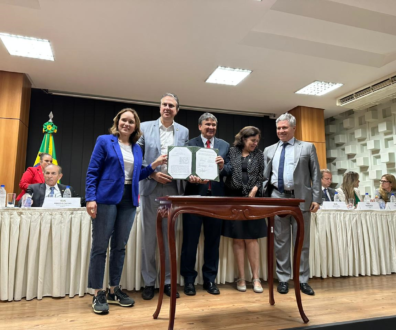
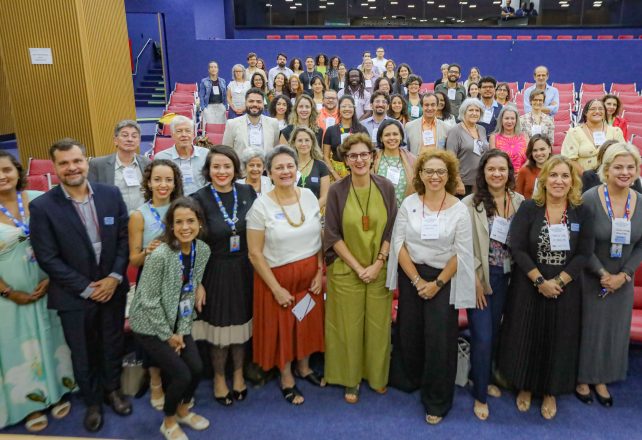
‘Food and nutrition security as a central theme in the training of public managers in Brazil and Latin America is an initiative that should be praised. It’s about encouraging the creation of public policies in an intersectoral and participatory way and at the same time encouraging South-South cooperation strategies,’ said the director of the World Food Programme (WFP) Centre of Excellence against Hunger in Brazil, Daniel Balaban, about the round table promoted this Friday (23) by the National School of Public Administration (ENAP), entitled “Challenges of the contemporary context and prospects for international cooperation”.  

In addition to the WFP, representatives from other UN agencies that have supported the course were also invited: FAO, IFAD, IICA, OEI, PAHO, UNICEF, as well as representatives from the Brazilian government.   

The event is part of the closing programme for the course ‘International Programme for Intersectoral Policies: Perspectives on Sovereignty Policies and Food and Nutrition Security’, which trains 23 Brazilian and 12 Latin American public managers in public policy strategies.   

The course dealt with food and nutrition security in detail, including the formulation of public policies and monitoring, the link between access to and production of adequate and healthy food, human health and food culture.   

 For WFP Centre of Excellence nutritionist Eliene Sousa, the course shows how much Brazil’s food and nutrition security is a benchmark for the world. ‘ENAP provides this exchange within the public service. It’s important for Brazilian civil servants to be able to exchange with other managers in Latin America, to find out what is being done in other countries in the area of food security, which is a form of South-South cooperation,’ she said.   

Eliene mediated one of the discussion tables at the course, in which eight students presented a case study on public policies. Among the topics covered were: the National Strategy for Healthy Eating in Schools; the National School Feeding Programme; the National Urban and Peri-urban Agriculture Programme; the Breastfeeding and Milk Bank Programme; and the Ecuadorian policy against child malnutrition.  

‘From the point of view of public management, it’s important to give internal visibility to existing Brazilian policies, but also to analyse them from an international perspective, in order to gain a perspective and increase awareness of the relevance of the work being done in the area of food and nutrition security in various countries around the world,’ said Eliene.   


Photo: WFP/ Sineide Neres

WFP nutritionist Sineide Neres represented the World Food Programme Centre of Excellence against Hunger in Brazil and participated on Wednesday (21) as one of the judges in the ‘Super Chef of Education’ competition for school cooks, an initiative of the Mato Grosso state government to reward the best school cooks in their state schools.  

With the aim of giving visibility to and valuing local school cooks, the competition was devised by the Mato Grosso state school feeding co-ordination team and inspired by the reality TV show “Vida de Merendeira”, a partnership between the National Education Development Fund (FNDE), the World Food Programme Centre of Excellence against Hunger and the Brazilian Cooperation Agency (ABC).  

This was the second edition of the competition in the state of Mato Grosso. In all, 14 finalists from various regions of the state came to Cuiabá to showcase their recipes, which favoured local ingredients such as freshwater fish (pintado and tilapia), pork, plantains and cabotiã pumpkin.  

‘There were varied, tasty and very creative dishes, such as baked fish meatballs in fresh tomato sauce with courgette spaghetti, for example,’ said Sineide, who tried all the dishes. ‘It was a lot of food, and all very tasty,’ she said, laughing.  

She explains that fish isn’t always well received in schools, where it can’t be served fried. ‘But the cooks managed to get round it and come up with very tasty options, accompanied by plantains in the form of mash or farofa.’  

The people responsible for cooking for children in schools are usually women, but there was one male finalist in the competition. ‘It serves to break down the stigma that this is only women’s work, despite the fact that it’s a heavy job with little visibility,’ said Sineide.  

And speaking of visibility, here are the names of the three winners of the competition in MT and the dishes they made:  

1st place: Natália de Freitas  

Recipe: fish broth with yams and cabotiã pumpkin  

City: Nova Canaã do Norte   


2nd place: Josiane Marinho   

Recipe: guinea fowl fillet with cabotiã cream  

City: Sinop   


3rd place: Geraldina Vala   

Recipe: pumpkin cream casserole with banana and fish   

City: Tangará da Serra  


On World Humanitarian Day, 19 August, we celebrate those who dedicate their lives to alleviating suffering and building a better future for those in need. An inspiring example of this dedication is the story of Joélcio Carvalho, an agricultural engineer and head of the Partnerships area at the WFP Centre of Excellence Against Hunger in Brazil.

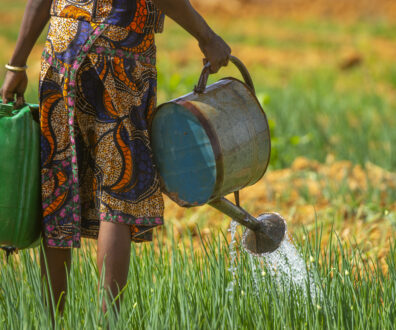
Joélcio Carvalho experienced a deeply moving moment during a recent mission in Tanzania. The scene unfolded when a local farmer, who had benefited from the training provided by Joélcio and his team, appeared with a sack full of maize and sweet potatoes. It was a symbolic gift but also a sign of transformation. The farmer, who had previously struggled to produce enough for his own family, was now in a position to share his abundance with others. “It’s satisfying to see that our work has contributed to transforming communities that previously didn’t produce enough even for self-consumption and are now producing abundantly, both for their families and for sale, thus improving the local economy,” Joélcio reflects with pride.

World Humanitarian Day is a time to highlight work like this and that of countless other volunteers, professionals, and crisis specialists who bring aid, food, medical care, shelter, water, protection, and more. These professionals bring hope to people in conflict zones and crisis areas.

Since he was 16, Joélcio has been dedicated to humanitarian work. He started as an intern at FAO even before graduating from the Federal University of Viçosa. Food production is a central part of Joélcio’s life story. As the child of a farmer from a smallholding background, he considers himself a product of public policies in this area. His motivation was natural, but over time, it was his sense of indignation that drove Joélcio into humanitarian work. “There is still much to be done,” he acknowledges.

His early entry into international cooperation allowed Joélcio to participate in field missions across various countries in Latin America and Africa. He recounts that during the closure mission in Tanzania, he and other Brazilian technicians had coordinated a workshop to teach local farmers how to make homemade water filters.

After the workshop, during a discussion with the farmers, Joélcio recounts that one of them stood up with a sack full of maize and sweet potatoes and requested the floor to say that he was there with this food, “because our Brazilian brothers taught me how to plant better, so I managed to produce more and I wanted to donate to you so you could have seeds and produce more, because it helped me and I think it will help you too.” Very touched, Joélcio said that at that moment he “broke down” because it made all that effort truly worthwhile.

For him, it is very satisfying to see this kind of result from a small change. “We showed him that instead of planting the potatoes vertically, if he planted them in a U-shape, like a hook, there would be many more roots and it would produce much more,” he explained. With this simple change, he increased his productivity tenfold, achieved abundance, and had a surplus for himself and for the community. “So this, this is priceless.”

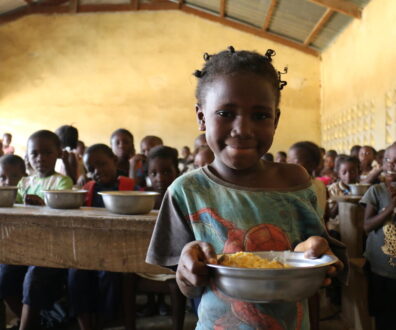
A delegation from São Tomé and Príncipe concludes a field visit to Brasília on Friday, 9 August, to gain first-hand insights into Brazil’s National School Feeding Programme (PNAE).

A delegation from São Tomé and Príncipe concludes a field visit to Brasília this Friday, August 9, to learn firsthand about the Brazilian National School Feeding Program (PNAE).

This visit was part of an experience-sharing process with Brazil organised by the World Food Programme’s (WFP) Centre of Excellence Against Hunger, in partnership with the Brazilian Agency for Cooperation (ABC) and the National Fund for Educational Development (FNDE). The delegation included the Minister of Education, Culture, and Science of São Tomé and Príncipe, Mrs Isabel Maria Correia Viegas de Abreu, and the Coordinator of the National School Feeding and Health Programme (PNASE), Mr Emanuel Montóia Gonçalves Afonso. Also participating was the WFP Country Office Programme and Policy Officer and Representative in São Tomé and Príncipe, Leon Victor Mushumba.

Drawing from the success of the Brazilian programme, the São Tomé and Príncipe delegation aimed to explore the link between school feeding and improvements in student enrolment rates and overall performance, as well as to learn about Brazilian best practices connecting PNAE with family farming and the use of local products. The delegation also attended lectures on programme financing.

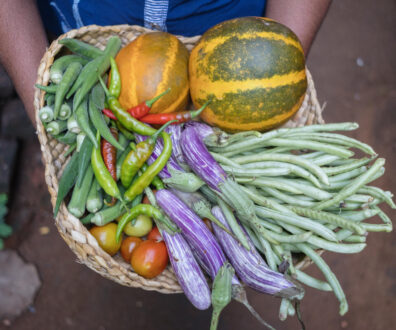
During the visit, the delegation explored the Association of Family Farmers of the Eco Community of Settlement 15 de Agosto (AFECA), an agroecological farm that supplies products to schools in the Federal District. They observed organic vegetable and fruit crops and discussed planting challenges with the farmers. They also visited the rural school EC Aguilhada, located in São Sebastião – DF, to observe the children’s lunch and see the PNAE in action at schools.

Minister Isabel Maria Correia Viegas de Abreu of São Tomé and Príncipe at CED 01 school, Guará – DF. Photo: WFP/Ana Mascarenhas

On the third day of their visit, the delegation went to CED 01 school in Guará – DF, where they sampled the food served to students, spoke with the kitchen staff and nutritionist, and visited the food storage facility adjacent to the kitchen. The same day, they toured the PNAE warehouse, which stores food used for school feeding in the Federal District.

Since 1976, São Tomé and Príncipe’s school feeding programme has been implemented and refined with WFP support, and has been financed and managed by the São Tomé and Príncipe government since the establishment of the National School Feeding and Health Programme (PNASE) in 2011.

“The WFP in São Tomé and Príncipe is primarily engaged in what we call capacity strengthening with the government to help it implement its school feeding programme. The WFP is providing technical assistance, but is also working with farmers and the Ministry of Agriculture to increase local production and resilience,” said Leon Victor Mushumba, WFP Programme and Policy Officer and Country Office Representative in São Tomé and Príncipe.

On average, the programme provides approximately 8 million meals annually, benefiting pre-school and primary school students, with one of its main goals being to ensure that the food is based largely on local products, making them more accessible to the population.

Minister Isabel Maria Correia of São Tomé and Príncipe stated that she also benefited from the school feeding programme as a student. “The food was provided solely by the WFP, which supplied foodstuffs to all schools in São Tomé and Príncipe. Today, we have mandatory school feeding aimed at improving the food security of children under the responsibility of the São Tomé and Príncipe state,” she said.

Another significant challenge faced by the country is the training of qualified professionals for the PNASE, such as nutritionists. According to Daniel Balaban, Director of the WFP Centre of Excellence Against Hunger in Brazil, this is a common request from various countries, including São Tomé and Príncipe.

“Few countries have trained nutritionists for school feeding programmes. They want to develop menus, but often lack qualified professionals,” Daniel noted.

Focusing on solutions to this issue, the delegation attended a meeting at the Ministry of Education to discuss the training of nutritionists for young people and adults, technical and vocational education, and inclusive education.

Visit to the agroecological farm – Association of Family Farmers of the Eco-Community of Settlement 15 de Agosto (AFECA). Photo: WFP/Maria Clara Ferreira

Workshops and Technical Meetings

In the early days of their visit, the delegation also participated in various workshops and technical meetings, beginning with presentations on the state of school feeding in São Tomé and Príncipe and Brazil, the work of the Centre of Excellence, and the WFP’s activities in São Tomé and Príncipe.

The FNDE presented data on the PNAE’s operations, provided a step-by-step guide on programme monitoring and evaluation, and conducted a workshop on menu planning. Additionally, the delegation met with the FNDE’s Budget and Financial Management Coordination for School Feeding to discuss the history of PNAE’s budget management and challenges faced in ensuring programme sustainability.

The team also met with FNDE President Fernanda Pacobahyba to discuss areas where Brazil could support technology transfer, such as sustainable management of school kitchens, implementing aquaculture projects to include tilapia in school menus, and accessing best practices for seed banks for growing food for school meals.

The fourth day began with a visit to IFB Brasília and continued with a meeting at the National Institute for Educational Studies and Research Anísio Teixeira (INEP). Topics covered included the school census, data collection on basic education, statistics, and educational studies.

The day concluded with a visit to the ABC, where the delegation was received by Ambassador Ruy Pereira and discussed the Agency’s work, potential cooperation projects, and updates on São Tomé and Príncipe’s presidency of the Community of Portuguese Language Countries (CPLP), a position it has held since 2023. The country is also part of the Global Coalition for School Feeding.

Finally, at the end of the visit, São Tomé and Príncipe shared its impressions of the mission and discussed the next steps for the PNASE, as well as the deepening of cooperation between the country and Brazil.